Participant Group: Disabled children and adults

HOW OUR:STORIES IS REIMAGINING READING FOR PLEASURE – AND WHY IT MATTERS NOW MORE THAN EVER 

HOW OUR:STORIES IS REIMAGINING READING FOR PLEASURE – AND WHY IT MATTERS NOW MORE THAN EVER 

This year marks the National Year of Reading, the biggest campaign in a generation designed to help more people (re)discover the joy of reading and make it part of their everyday lives.  

The initiative presents a time to reflect on how and why children read, and who is being left out of the story. Reading can open new worlds but for many children with special educational needs and disabilities (SEND), those worlds remain out of reach.  

While much of the national conversation around literacy focuses on attainment and school results, there is growing recognition that how children engage with reading is just as important as whether they can do it. Reading for pleasure – or volitional reading – supports wellbeing, identity and long-term motivation. But for many SEND children, access to those experiences is still lacking. 

That’s where Create’s new programme, our:storiescomes in. Designed for children with SEND, our:stories brings our professional artists into SEND schools, enabling children to explore storytelling through creativity and play, and with a sense of agency.  

But why is this work important? To find out, we spoke to Dr Helen Hendry, a Senior Lecturer in education at Open University (OU) who is part of the ‘learning partner’ team working with of the Mercers’ Company Literacy and Oracy Special Initiative, about the broader state of research around reading for pleasure – and why programmes like ours are more important than ever. 
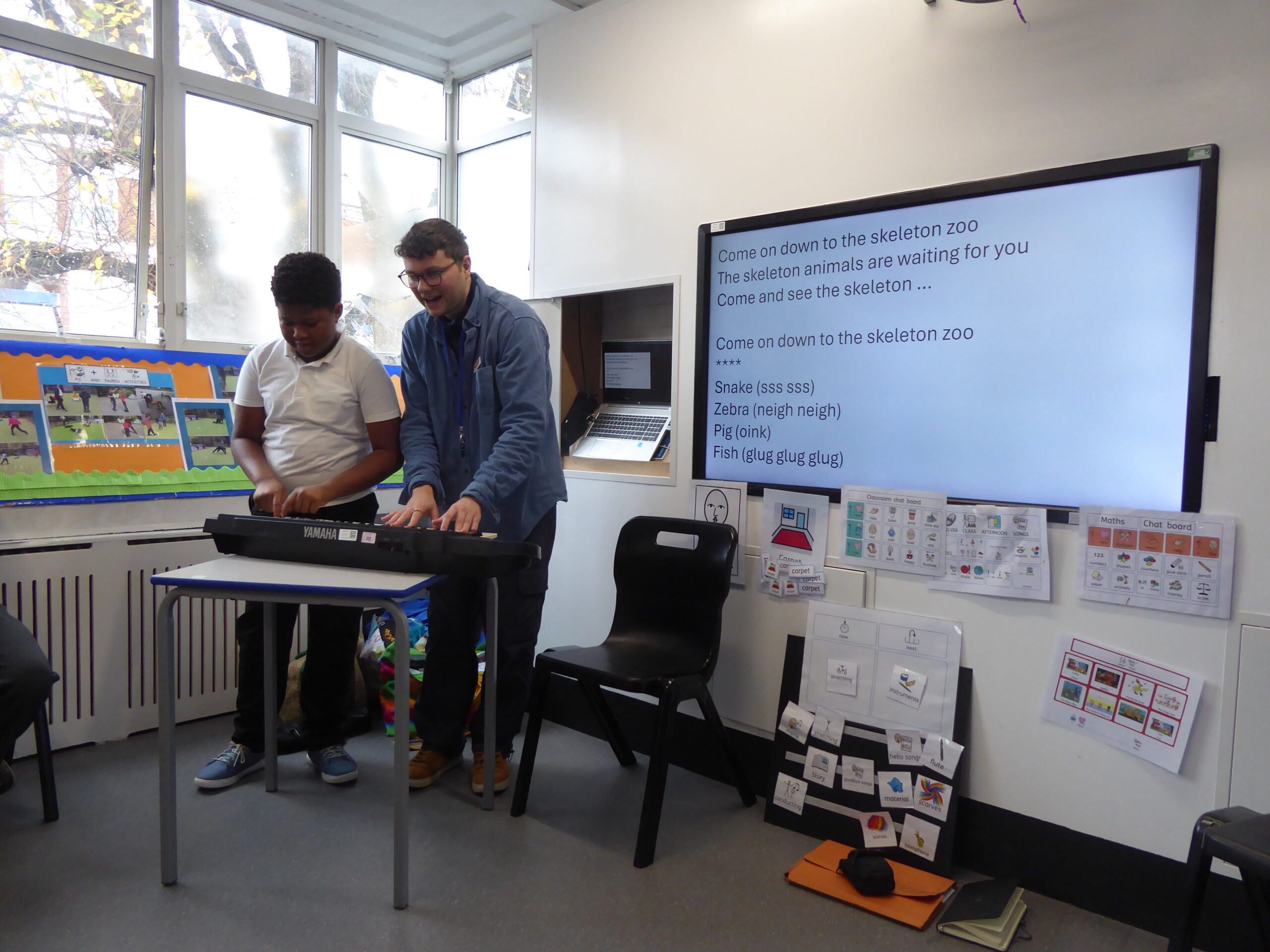
SEND young person with Create artist, playing a keyboard in a school setting, exploring reading and stories through music.

The decline in reading for enjoyment 

Despite the wealth of research showing the benefits of reading for pleasure – including improved vocabulary, empathy and cognitive development – recent statistics show a sharp national decline in engagement: 

  • In 2025, only 32.7% of children and young people aged 8-18 said they enjoy reading in their free time, the lowest level recorded by National Literacy Trust. 
  • Fewer than one in five (just 18.7%) read daily for pleasure. 
  • Since this data began being collected in 2005, reading enjoyment has dropped by 36%. 

“There isn’t much research on volitional reading and writing for children with SEND: not about the skills, but about wanting to read for pleasure,” Helen commented.  

A lot of the research available doesn’t give us the tools to work with children with special needs.

HELEN HENDRY

Helen explained that while there is a strong international research base indicating the many benefits of reading for pleasure – including improving vocabulary and cognitive development – few studies explore how this applies in specialist settings. 

Introducing our:stories 

Developed by Create in response to the gaps in both access and research, our:stories is a high-quality, inclusive creative programme that uses visual art, drama, dance and other artforms to explore texts and books as tools for engagement and wellbeing, not just literacy attainment. 
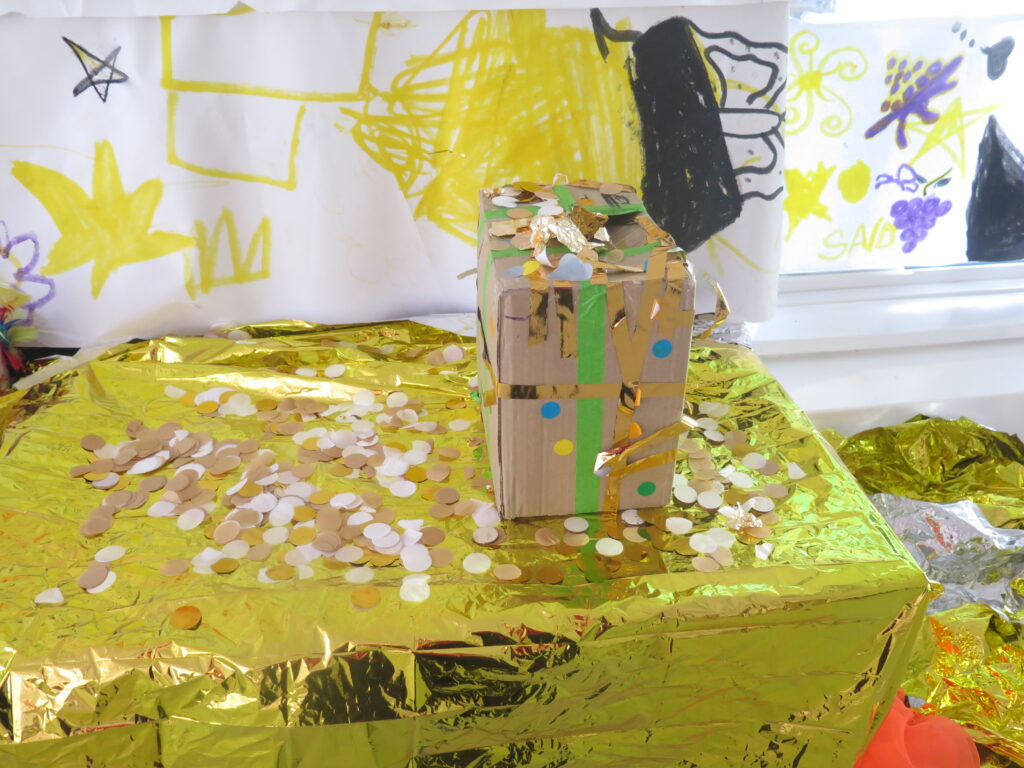
Artwork from our:voices project where SEND children engage with reading in new and accessible ways.

It has been specifically designed for children with SEND, who are often overlooked in traditional reading initiatives. Each projects is led by one of our professional artists and co-designed with schools. Texts are chosen collaboratively and explored creatively, allowing children to connect with stories in ways that feel accessible, meaningful and fun. 

Workshops are multi-sensory and participant-led, helping children to develop social skills, oracy, creative expression and self-esteem. Teachers attend alongside their students, gaining new tools to support literacy in the classroom long after the project ends. 

A novel approach that fills a gap 

Helen’s current research focuses on reading and writing for pleasure across a range of organisations. With funding from The Mercers’ Company, she has been analysing how different charities approach reading and writing for pleasure; and says Create’s model is distinct: 

In the research I’ve read, and undertaken, I haven’t seen any other projects that combine creatives, children with SEND and reading and writing for pleasure in this way.

HELEN HENDRY

Helen also emphasised the importance of working in a way that is responsive and flexible: 

It’s important for those working with children to understand what research tells us about practices that support them to want to read and write, and to implement these based on the needs of the children or young people. There are a lot of nuances.” 

why it matters now 

As the National Year of Reading gathers momentum, our:stories shows how creative approaches can foster a love of stories and storytelling, particularly among children who face additional barriers. Children with SEND are more likely to experience exclusion from traditional classroom environments, where there is often limited space for agency, play and creative exploration. our:stories responds directly to this gap, creating workshops that are shaped by children’s interests and communication styles, and allowing reading and writing to be experienced as something joyful, expressive and collaborative.  
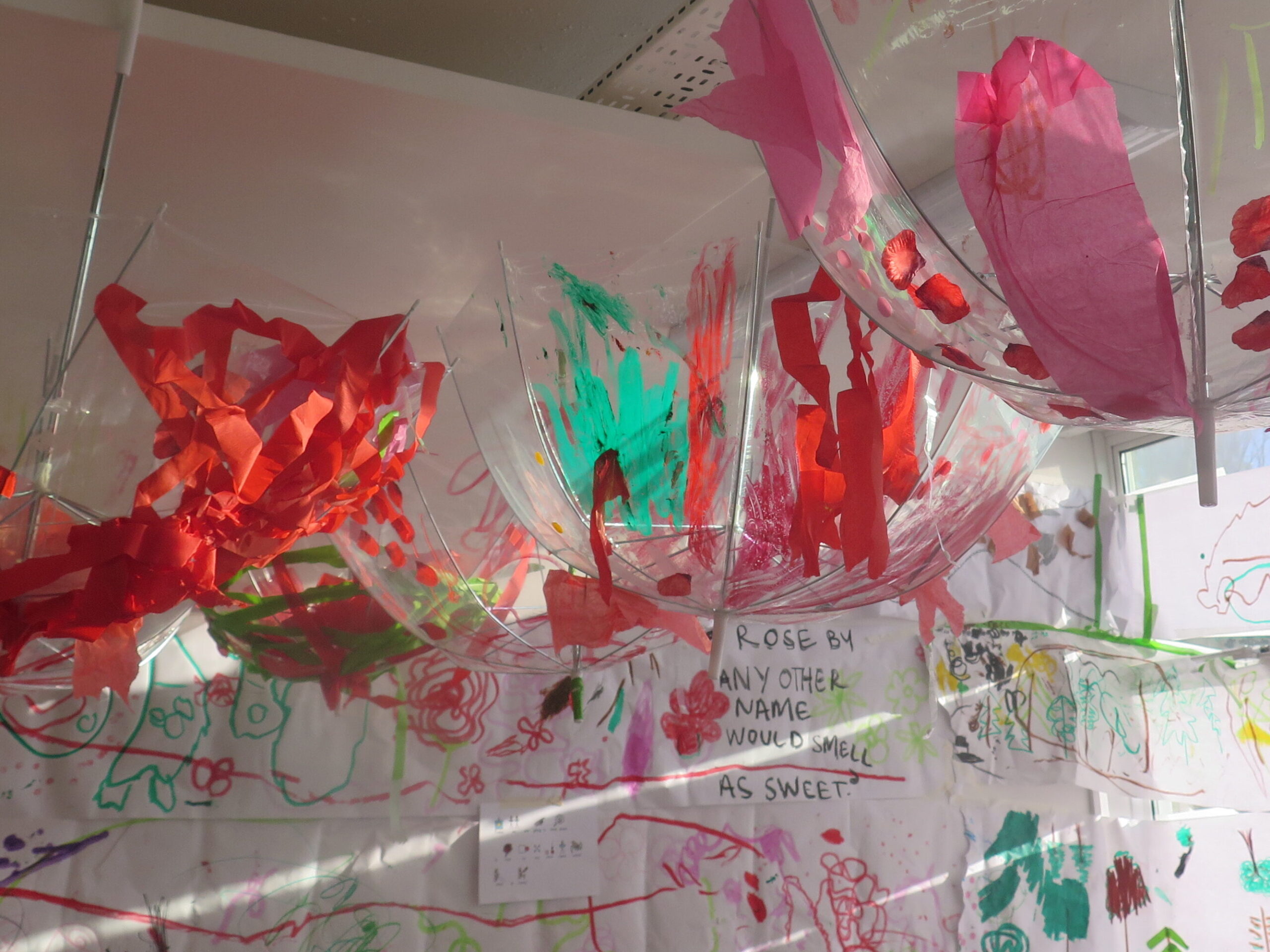
Artwork from our:voices project where SEND children engage with reading in new and accessible ways.

Reflecting on her observations of our:stories, Helen explained: 

“In our:stories, really listening to what children are communicating can be watching how they respond. The facilitator artist flexed the session to flow with what the children were interested in, giving them agency and choice over what was happening. This isn’t something that can always happen in traditional school activities, due to curriculums and wider targets.” 

This responsiveness sits at the heart of our:stories. By prioritising enjoyment and creative interpretation, the programme offers SEND children the opportunity to build confidence, develop a positive relationship with reading and writing, and see themselves as storytellers. 

our:stories is funded by St Paul’s Schools Foundation [via The Mercers’ Company]. 

With thanks to Helen Hendry for offering her expertise and insights. 

You can read more about The Open University’s previous reading and writing for pleasure research for The Mercer’s Company here

DONATE TO CREATE

£
Select Payment Method
Personal Info

Credit Card Info
This is a secure SSL encrypted payment.
Billing Details

Donation Total: £25.00

our:stories – bringing reading to life through art and movement 

our:stories – bringing reading to life through art and movement 

As the National Year of Reading invites us to reimagine how children engage with books, our:stories shows us what’s possible when reading and writing for pleasure are explored beyond the page. Across our recent our:stories projects at The Avenue School in Brent and The Livity School in Lambeth, pupils with SEND explored stories through visual art, dance and movement. This supported their literacy, wellbeing and confidence in ways that traditional classroom approaches alone often can’t.

our:stories is Create’s programme for SEND pupils across London, using the arts to support reading and writing for pleasure and to help children develop their identities as readers and storytellers. 

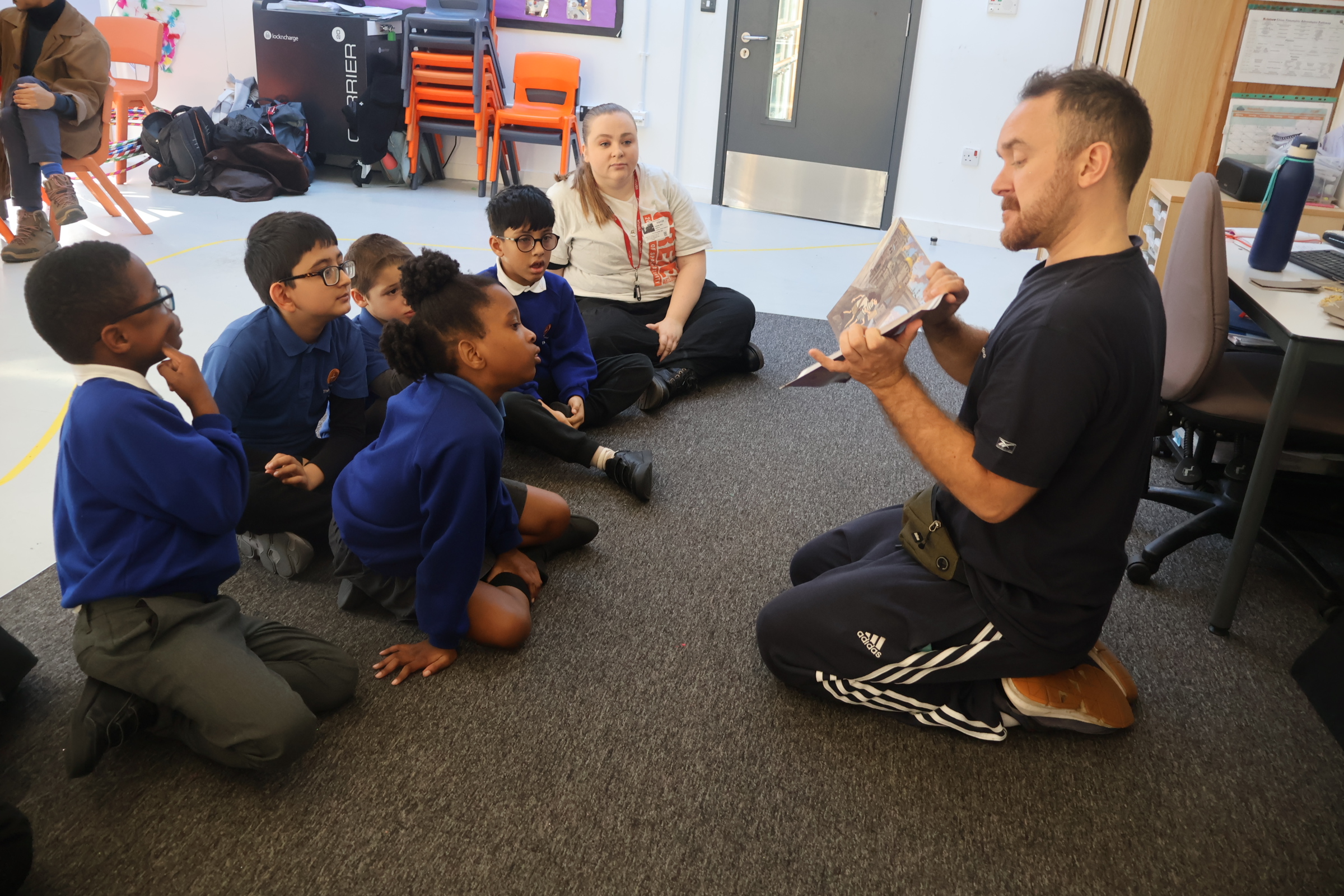
A Create artist shows SEND children  a story book with pictures, to explore stories through dance on an our:stories project.

ENGAGING WITH STORIES THROUGH VISUAL ART 

Over six sessions between November and December 2025, Create artist Chloe Cooper worked with pupils at The Avenue School, using visual art to explore The Boy Who Loved Broccoli. For Marzena, a teacher and literacy lead at the school, the project offered something distinct from everyday classroom literacy: 

“The different types of stimuli were great for pupils to have the sensation of the story. We could see lots of enjoyment in the sessions.” 

Using colourful tape, paint pens and model-making, pupils acted out and reimagined the story, making connections between the written word and real-world experiences. The pace of the sessions allowed the pupils to have space to make choices, follow their curiosity and express their opinions: 

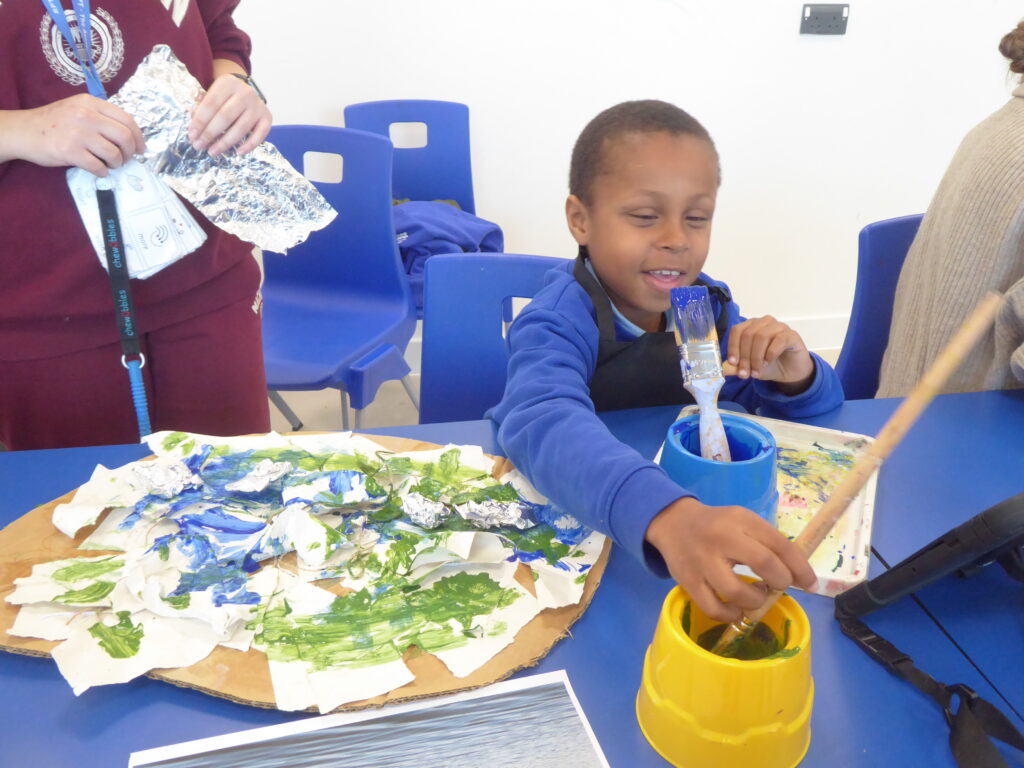
A SEND student explores reading through visual art. They sit at a table with paintbrushes and painting on top.

“[These sessions] bring a different perspective from what we are doing in class. They move at a slower pace and allow pupils to be creative and messy. Pupils can make their own choices and have their opinions. If they wanted different materials, they were offered [them], so that was great.” 

They could express themselves, so the creative arts were boosting their wellbeing.

Marzena, teacher & literacy lead at the avenue school

EXPLORING STORYTELLING THROUGH DANCE AT THE LIVITY SCHOOL 

At the Livity School in Lambeth, Create dancer Paul Smethurst led six days of dance and movement workshops, supporting students to interpret stories physically, rather than verbally. Teacher Adam reflected on how movement presented new ways for pupils to engage with reading and comprehension: 

“They’ve been reading different books, interpreting them and exploring them through dance and movement.” 

“It’s very individually tailored. Paul has been really good at getting them all involved

I think when the kids see somebody else with that sort of enthusiasm, they really take to it.

adam, teacher at the livity school

For pupils who are confident with literal answers but find abstract thinking more difficult, dance offered a route into self-expression: 

“There are many in the class who are very good at reading or answering a black-and-white question, but actually to express their own ideas is something they need a lot of encouragement to do.” 

Through movement, the students explored how characters feel, what stories suggest “between the lines”, and how different people interpret the same text in different ways – all core skills for reading comprehension and communication: 

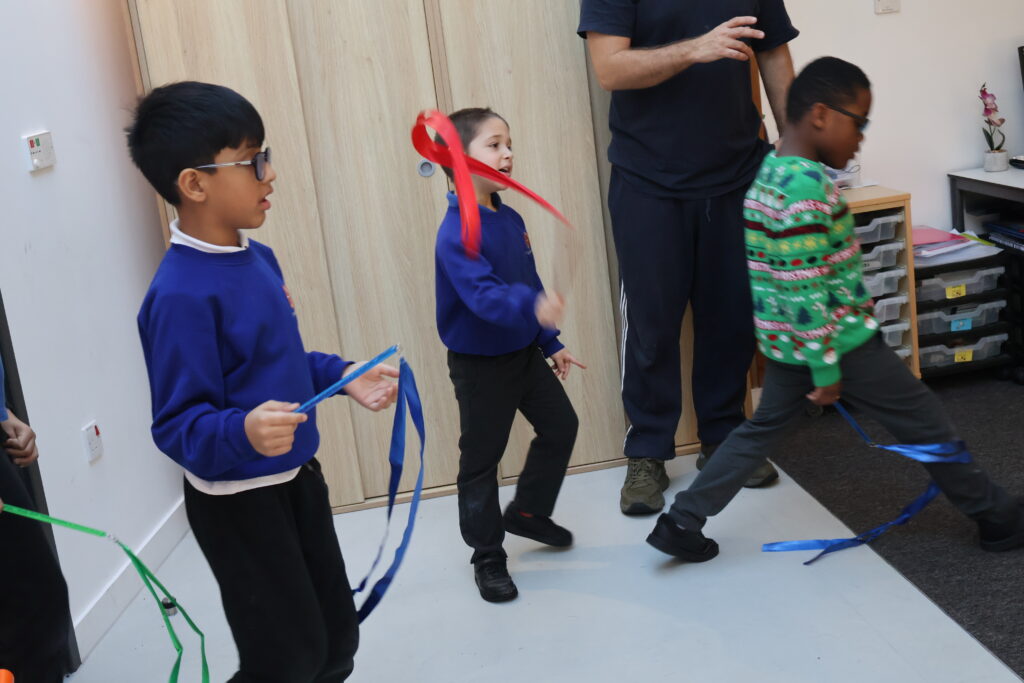
SEND students explore reading and stories through dance. They hold ribbons and dance in a room.

“There are definitely things from the project that we’ll keep going and implement in communication sessions. From here on, there’ll be a lot of work on “how do you see this” or “how does this make you feel?” That’s the sort of communication they need to have. They need to be able to say it themselves but also understand what their peers are saying as well.” 

WHY READING FOR PLEASURE NEEDS INCLUSIVE APPROACHES 

Nationally, reading for pleasure is in decline. Recent research shows that less than a third of children say they enjoy reading, with pupils with SEND significantly less likely to engage with books independently or see themselves as “readers”. 

For many SEND pupils, traditional literacy approaches can feel inaccessible, particularly when reading is presented as a task rather than an experience. our:stories responds to this challenge by placing creativity, choice and wellbeing at the heart of reading and experiencing stories. 

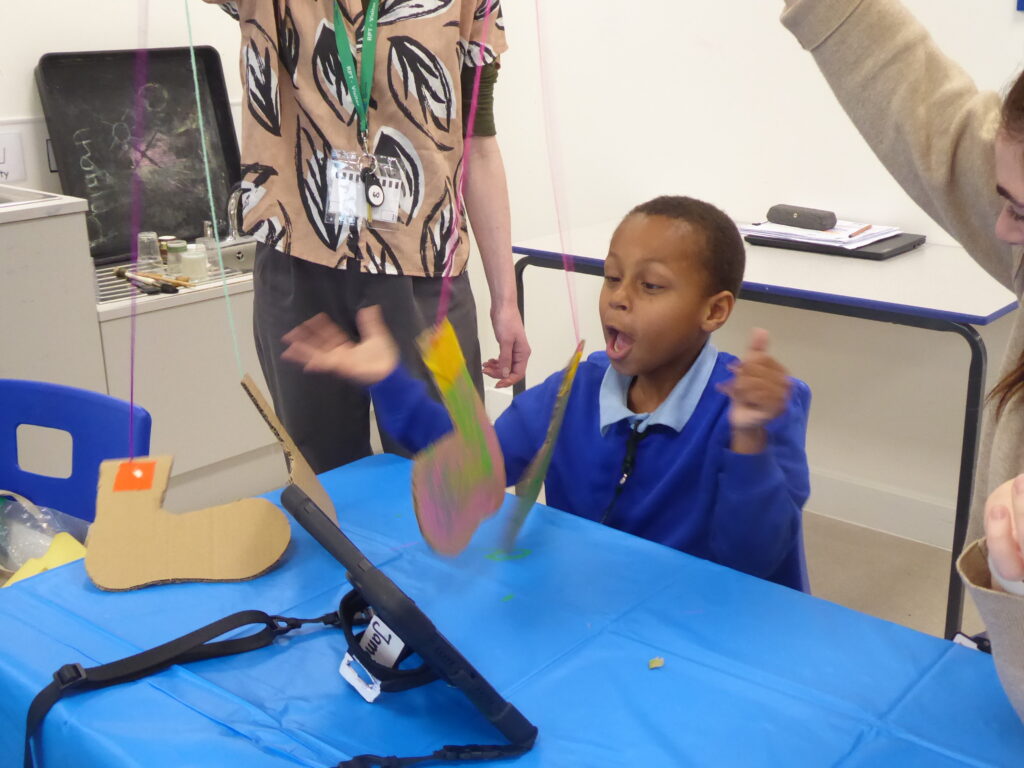
A SEND student on our:stories exploring stories through visual art. The artist holds carboard cutout shoes on string, like puppets. The student is smiling.

By exploring stories through art and movement, pupils are supported to: 

  • Engage with books in ways that suit their communication styles 
  • Build emotional understanding and imagination 
  • Develop confidence as readers and storytellers 
  • Experience reading as pleasurable, social and meaningful 

As the National Year of Reading encourages schools and communities to widen access to books, our:stories demonstrates that reading should be accessible, creatively led and most importantly, for everyone. 

our:stories is funded by St Paul’s Schools Foundation [via The Mercers’ Company]. 

DONATE TO CREATE

£
Select Payment Method
Personal Info

Credit Card Info
This is a secure SSL encrypted payment.
Billing Details

Donation Total: £25.00

JOY, BELONGING AND A BREAK FROM RESPONSIBILITY: WHAT CREATIVITY MEANS FOR YOUNG PEOPLE 

JOY, BELONGING AND A BREAK FROM RESPONSIBILITY: WHAT CREATIVITY MEANS FOR YOUNG PEOPLE 

For many young people, the festive period isn’t just sparkle and celebration. Children in care, disabled young people and young carers often face additional pressures, from feelings of isolation to daily responsibilities far beyond their years.

At a time of year that celebrates family and joy, it can be easy to forget that not all children get the chance simply to be children. That’s why creative opportunities matter – not just at Christmas, but all year round.  

Thanks to our supporters, we’re able to deliver high-quality creative programmes that offer marginalised children the freedom to explore, express and connect. In 2025, our programmes have supported nearly 1,000 children across the UK. Below, three participants reflect on what that experience has meant to them. 

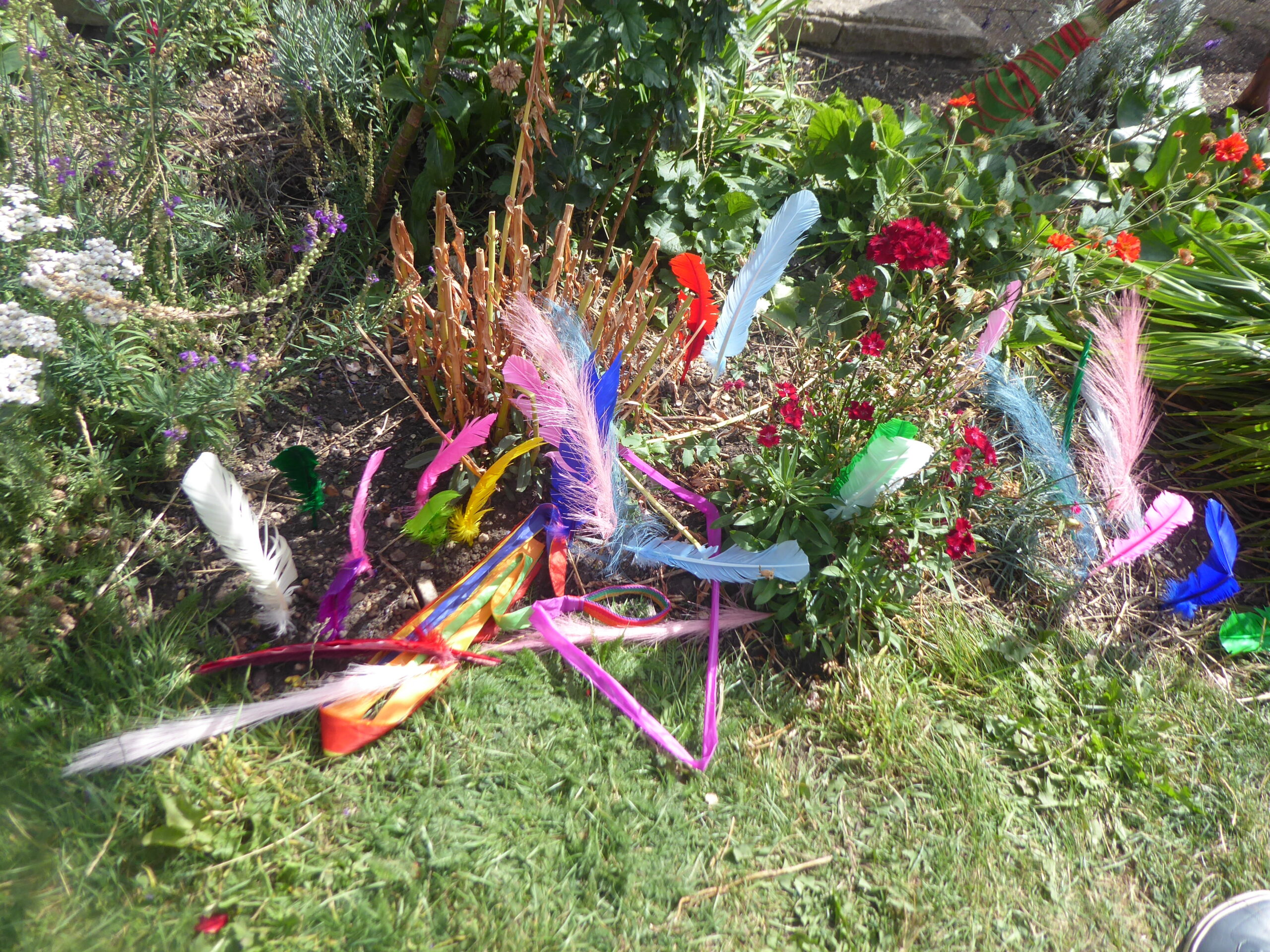
Feathers and fabric layered aroud flowers in the grass.

Confidence and connection for care-experienced young people 

Emily* (16) took part in music workshops in Bolton through our:voices, a Create programme with children in care and care leavers. Working with our professional musician Matt Dunn, the group composed original music, played covers and built confidence together: 

“I feel great. A lot more confident. Everyone’s very kind and we work well together. The project is really refreshing and it gets you out of the house. I feel brighter. [Being creative] is important because it really lets you open up as a person and you can become more positive.” 

Having been in care for eight years, Emily shared how the project gave her a chance to connect with others who understand: 

“Sometimes when you’re in care you can struggle to make friends because you can feel a bit down.” 

“But [in projects like these] you meet other people” in your situation and you have a fun time with them.”

EMILY, OUR:VOICES participant

CREATIVE FREEDOM FOR YOUNG CARERS 

Evelyn* (13) cares for her younger sister who has autism, a constant responsibility that leaves limited time for herself. Over three days in April 2025, our musician Filipe Sousa delivered inspired:arts music workshops with young carers at Bromley Well Young Carers Centre. Through the project, Evelyn had the chance to step away from those responsibilities and focus on creativity:

“We’ve made lots of songs and discovered different ways to make them. I’ve liked playing guitar and bass because they’re [my favourites] and working in a group to create an actual piece has been really enjoyable. 

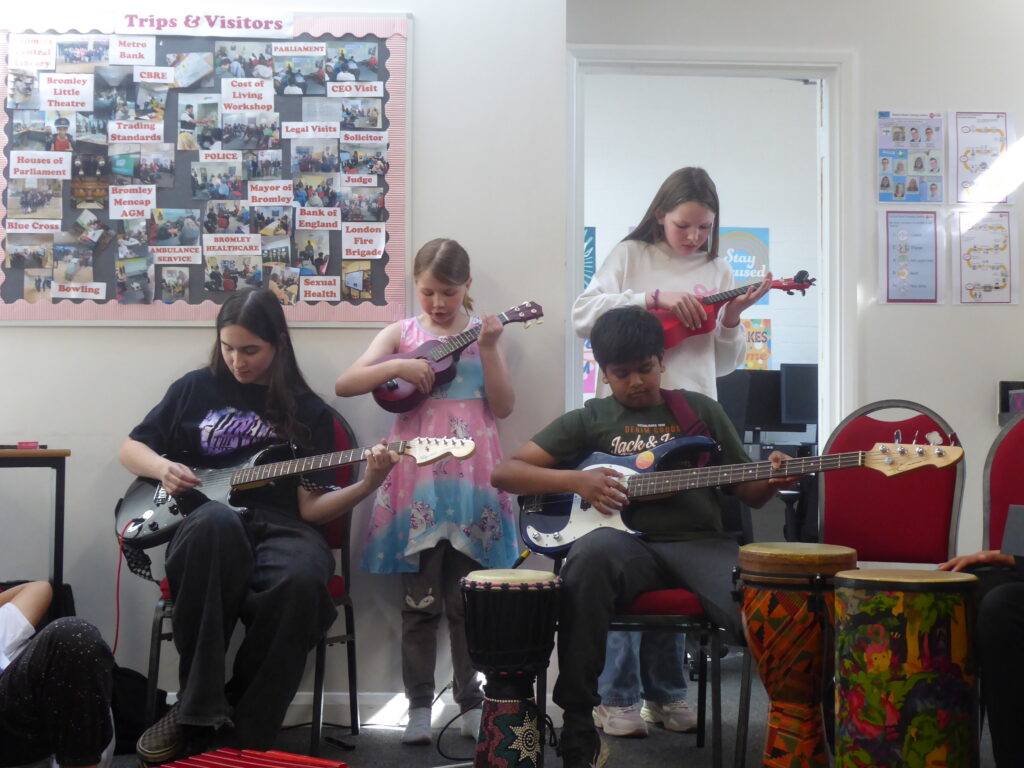
Young carers playing guitars and ukuleles as part of an inspired:arts music workshop.

Evelyn also reflected on the difficulties of being a young carer: 

“Sometimes I have to be really careful what I say around [my sister] and I have to help her if she has a meltdown, especially if we’re not with our parents. I have to keep an extra eye out for her, especially because she’s younger than me. I always have her on my mind thinking, ‘is she okay?’ 

“Lots of young carers may not get the opportunity to do stuff like this.” 

“These projects give them a chance to have something to focus on and they don’t have to worry about who they care for.”

EVELYN, INSPIRED:aRTS PARTICIPANT

Exploring expression for disabled young people 

Jay* (25) took part in our community:matters programme at Brent Mencap, which supports disabled young people through inclusive, participant-led creative workshops. The programme empowers participants to build social and communication skills in safe, joyful environments. 

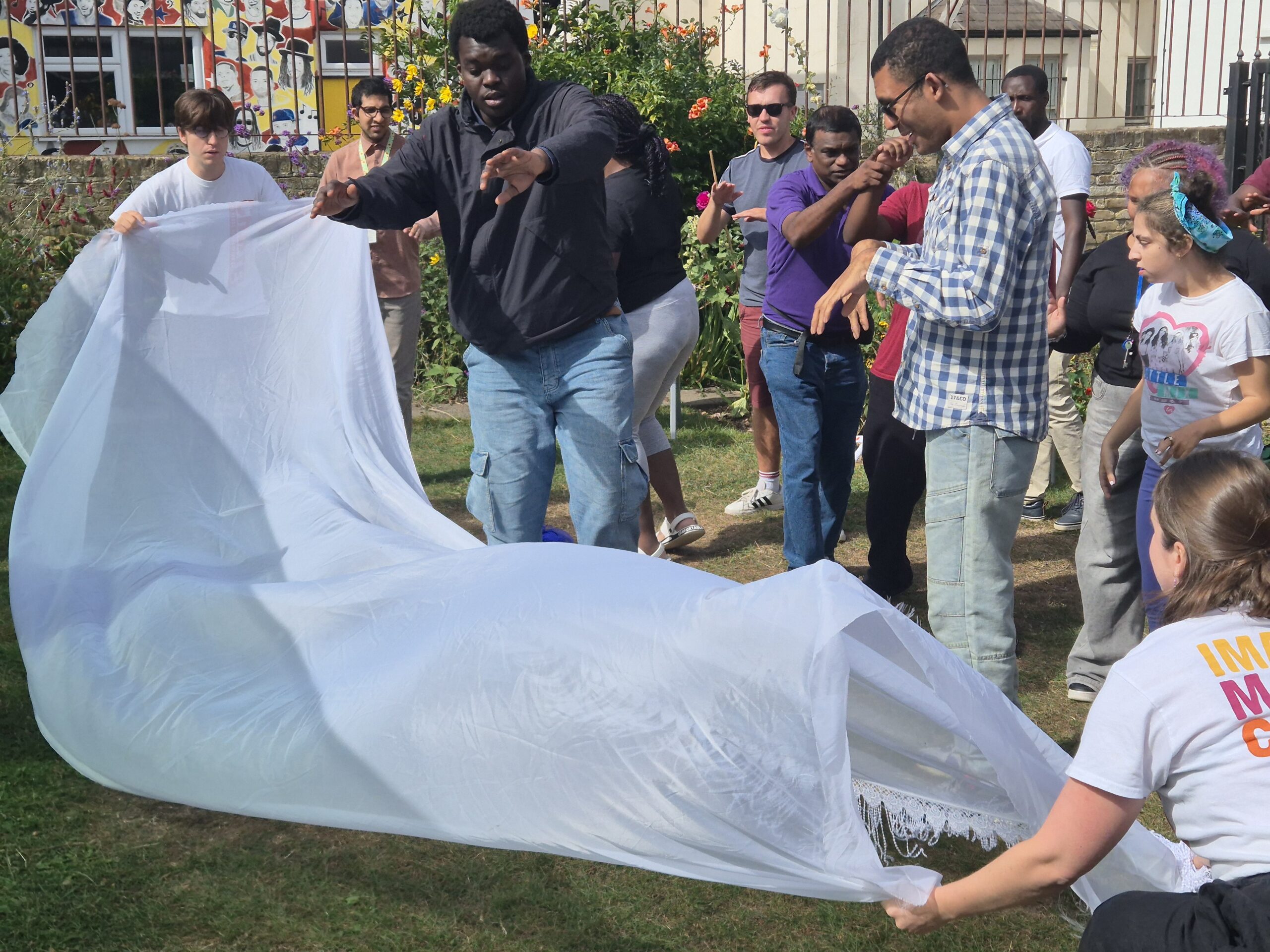
Young people with disabilities taking part in a dance workshop as part of our community:matters programme.

During the project, Jay joined a three-day dance and visual storytelling workshop led by our professional dancer, Paul Smethhurst: 

We did the tent dance. And then we did some drawing [of our own islands]. I drew the beach. [I was] making textures and going to new places.” 

For Jay, the opportunity to be part of a creative team helped build connection and confidence: 

It made me feel happy and excited.

jay, community:matters PARTICIPANT

“It warmed up the body and made me feel full of energy. I enjoyed working in a team and meeting new people and seeing old friends. It makes me feel welcome.” 

Why it matters – and how you can help 

Creative arts offer young people the chance to express themselves, explore new ideas and build community. For those facing additional challenges – such as the responsibility of being a carer, the instability of the care system, or the exclusion that can come with disability – these opportunities can be life-changing. 

This Christmas, you can help bring joy, confidence and connection to those who need it most. 

Give the gift of creativity – not just for the holidays, but all year round. 

Donate now to our Christmas campaign.  

Thank you to John Lyon’s Charity and The National Lottery Community Fund for funding these projects. 

*Names changed to protect anonymity. 

DONATE TO CREATE

£
Select Payment Method
Personal Info

Credit Card Info
This is a secure SSL encrypted payment.
Billing Details

Donation Total: £25.00

AN INTERVIEW WITH FUNDER JOHN LYON’S CHARITY

AN INTERVIEW WITH FUNDER JOHN LYON’S CHARITY

“We knew the projects would work because they’re being delivered by a trusted organisation.”

John Lyon’s Charity (JLC) is a grantmaker transforming the lives of children and young people by creating opportunities to learn, grow and thrive through education. Since 2013, Create has been proud to partner with JLC to deliver high-quality creative projects across London.

Through this long-standing collaboration, we have launched major programmes such as changing:minds, community:matters and inspired:arts, reaching disabled young people, young carers, care leavers and refugees in JLC’s priority boroughs. We spoke to Anna Hoddinott, Senior Grants and Communications Manager at John Lyon’s Charity, about the impact of our partnership – and why creativity matters more than ever.

SHARED VALUES, CREATIVE VISION

“There’s a lot of synergy between JLC’s values and those of Create. Create strives to evolve constantly, develop and hone its offerings. We see the value in Create’s approach and methodology: projects cross a multitude of different artforms and can be adapted to various audiences with various needs.

“Create has a passion for interrogating its work and striving to be the best that it can be, combining diverse artforms, passion, drive, high-quality practitioners and rigorous evaluation all in one place. If a funder wants to fund really high-quality projects, then Create gives a lot of options.”

building new programmes with trust at the core

Create’s long relationship with JLC has led to the co-design of key programmes including changing:minds, which embeds creativity and financial literacy, and community:matters, which brings creative workshops to young people in vulnerable circumstances. For JLC, that level of collaboration is based on deep trust.

“We have known Create for a considerable amount of time, which has enabled us as funders to believe in its ability to have the right impact and outcomes.

Create’s openness and flexibility to develop programmes targeting priority groups and locations for JLC made the charity an ideal partner.

Anna Hoddinott, Senior Grants and Communications Manager at John Lyon’s Charity

“This flexibility put Create in a really strong position to secure funding for new projects: we knew the projects would work because they’re being delivered by a trusted organisation.”

CREATING LONG-TERM IMPACT FOR CHILDREN AND YOUNG PEOPLE

At the heart of this partnership is a shared belief that creativity should be participant-led, empowering children and young people to shape their own experiences. As Anna explains:

“The positive impact starts from the beginning. Participants can choose the artform that most resonates with them, giving them agency over their experience. This element of co-creation is really empowering and gives a greater impact because participants know that they are taking part in something that they have chosen to do.

“It’s really important that the participants are not delivered to, but delivered with. That really comes across with the work that Create does; participants are encouraged to find their own way through projects, while being supported to engage as much as they are able.

“The projects I have visited are always really engaging for the participants. All of the young people seem to be really enthusiastic.

“On the whole, the impact on participants is huge. And not just in the moment, but also long after the end of the project, instilling confidence, a sense of wellbeing and all the positivity that engaging in arts projects can bring.”

Why CREATIVITY MATTERS

Like Create, JLC recognises that creativity plays a fundamental role in education, emotional health and society at large – especially at a time when access to the arts is under threat.

“Creativity is fundamentally important for everybody. I think it’s important that creative arts are included in school curriculums, but they are so often overlooked in favour of more academic subjects.

“Having access to creativity and cultural capital can boost everybody’s mental wellbeing, helping people thrive emotionally, professionally, and in relationships.

Creativity gives a mirror to see yourself reflected and a window to view the world through different perspectives.

Anna Hoddinott, Senior Grants and Communications Manager at John Lyon’s Charity

“Being able to access creativity leads to a really well-rounded society with really healthy and grounded people within it.”

A MESSAGE TO FUTURE FUNDERS

When asked what she would say to other funders considering supporting Create, Anna’s answer was simple:

“Do it! It’s difficult to find organisations that deliver such a range of activities, specialising in working with so many different participant groups, with such quality.

“Create gives funders the confidence that their support will be used thoughtfully, rigorously and with great impact. You’d be supporting work that truly changes lives.”

A huge thank you to John Lyon’s Charity for funding changing:minds, community:matters and inspired:arts.

DONATE TO CREATE

£
Select Payment Method
Personal Info

Credit Card Info
This is a secure SSL encrypted payment.
Billing Details

Donation Total: £25.00

Our:Stories – Drama, Storytelling and Reading at Pentland Field School

Our:Stories – Drama, Storytelling and Reading at Pentland Field School

At Create, we believe that reading, writing, storytelling and drama aren’t just school subjects – but powerful tools for confidence, identity and belonging. However, for many children with special educational needs and disabilities (SEND) these opportunities don’t always feel accessible or meaningful.

According to recent data, just one in three children and young people aged 8 to 18 say they enjoy reading in their free time in the UK- and reading enjoyment among this group has fallen to its lowest point in 20 years. SEND pupils are among those least likely to report reading for pleasure, yet they stand to benefit the most from high‑quality creative literacy programmes.

That’s why our:stories, Create’s project with SEND schoolchildren across London, is so important. Over six weeks in June and July 2025, artist James Baldwin delivered drama and storytelling workshops at Pentland Field School, a special school for SEND pupils. We caught up with Leah, a teacher at Pentland Field, to hear about how the project impacted students.

Engaging with Storytelling

Leah described how the pupils explored storytelling through song, drama and creative writing together:

“They have been supported each week to make choices about creative words they would like to use and about story sequencing. They have also been using art in different mediums and incorporating drama and storytelling into each session to create their own stories, which has allowed them all to be creative and do their own thing.”

Despite challenges, such as forming letters or full sentences, the sensory and multi‑modal nature of the sessions made it accessible and meaningful:

“When I’ve looked at some of the pupils’ work, I can see that they might not have formed every word or every letter, but having those different textures and different bits to be hands‑on with means they’re still being part of that creative process [and that’s] really important to them.”

Building Confidence and Connection

For many of the students, this was a chance to step confidently into performance and group work in ways they hadn’t before. Leah observed:

“A lot of our pupils haven’t got independent creative thinking skills, but in some of the work that I’ve seen, I can tell that they have used their own language… Confidence is a big thing. You can see that [the pupils] are so confident to get up and dance and sing and shine in front of all of those people.”

Coming together with other classes also helped students feel more themselves in front of peers, she noted:

They have definitely opened up more, and coming together with another class shows that they’ve got the confidence to be themselves in front of others.                  

Leah – community partner

Reading and Writing for Pleasure

One of the goals of our:stories is to foster enjoyment and ownership in reading and writing – not just proficiency. Leah shared moments where older students particularly surprised her by embracing creative writing:

“[The pupils] love stories and storytelling, but I think for some of the older, more mature boys to be proud of creative writing was something that I had never seen from that cohort before… They really had ownership of the story.”

She emphasises that the balance between structured writing and creative freedom is important:

“The pupils need a balance between getting things done on paper and having that creative freedom to be able to take a break, get a bit loose, and allow that to all come together.”

Looking Ahead: Embedding Creativity

The impact extended beyond the workshops themselves. Leah reports that teachers and staff are inspired to embed elements of our:stories into their classes permanently:

“We are going to start embedding [this learning], and think about that level of creativity [when teaching] reading and writing.”

Why It Matters

Over 19.6% of school pupils in England have identified special educational needs (SEND).

Reading enjoyment among 8‑18 year olds is now at its lowest level in decades: only 32.7% say they enjoy reading in their free time.

These statistics show the scale of the challenge – and why work like our:stories is so essential. Not just for skills, but for identity, wellbeing, voice and connection.

Funded with the support of the St Paul’s Schools Foundation [via The Mercers’ Company].

DONATE TO CREATE

£
Select Payment Method
Personal Info

Credit Card Info
This is a secure SSL encrypted payment.
Billing Details

Donation Total: £25.00

UNLOCKING CREATIVITY IN HARROW: CHANGING:MINDS 2025

UNLOCKING CREATIVITY IN HARROW: CHANGING:MINDS 2025

At Create, we believe that every child – including those with special educational needs and disabilities (SEND) – deserves access to high-quality creative opportunities. That’s why, with the support of John Lyon’s Charity, we’ve been delivering our multi-artform programme changing:minds with pupils at all five special schools in Harrow since 2019.

Designed to enhance confidence, communication and creativity, changing:minds takes our professional artists into special schools to co-create engaging projects with children and their teachers. This June, our artists led transformative projects across the arts (including animation, drama, music, photography and printmaking) at: Alexandra School, Kingsley High School, Shaftesbury High School, West Lodge Primary School and Woodlands School. These projects sparked imagination and connection in powerful ways and culminated in an inspiring showcase that spotlighted the students’ incredible talent.

EXPLORING SOUND AND SELF-EXPRESSION AT KINGSLEY HIGH SCHOOL

At Kingsley High School, our musician John Webb led a six-day music residency, inviting pupils to explore instruments, use music apps like ThumbJam and express themselves with their voices and bodies.

Teacher Sanjeetha saw meaningful breakthroughs:

“They’ve been exploring different instruments, using the iPad app, using their voices. One student didn’t want to touch the instruments at first – and then he played. That was a breakthrough.”

Her colleague Mary added:

“It’s not just sitting in a circle and banging percussion instruments. It’s been more involved than that.

The smiles and laughter showed everyone wanted to be there.

Mary – community partner

Over the years, students at Kingsley have also explored dance, drama, painting and puppetry through changing:minds. The long-term legacy of the programme is clear:

“It gives children an opportunity they don’t normally have,” said Sanjeetha. “It takes a lot of confidence and courage to be up on stage.”

And the benefits extend beyond the students:

“When specialists come in and share their creativity,” said Mary, “teaching assistants take ideas back to the classroom.”

CONFIDENCE AND CREATIVITY ON STAGE AT ALEXANDRA SCHOOL

At Alexandra School, our drama artist Martin Murphy delivered a six-day drama project, helping pupils unlock their imaginations through physical movement, storytelling and performance.

Teacher Krupa watched her class grow through the challenge:

For some children, acting is difficult, but they’ve really grown in resilience and pushed on. They’ve worked together as a team and created something that’s completely their own.

KRUPA – community partner

The project also offered valuable inspiration for teaching:

“A lot of the drama skills and storytelling can be used in PE and English. The children don’t get the chance to do anything like this otherwise.”

Krupa described the joy of watching the students celebrated for their creativity:

“They’re never on a stage like that normally. I think it increases their confidence – it’s brilliant.”

THE LASTING IMPACT OF CREATIVE LEARNING

Whether through the chime of a bell, the flap of imaginary wings or a shared moment of laughter, the impact of changing:minds is lasting. By embedding creativity into the school environment, the programme nurtures confidence, communication and a sense of possibility for both pupils and staff.

We’re deeply grateful to John Lyon’s Charity for its continued support. With its help, we’re making creativity more accessible for children with SEND and building a legacy of inclusion, imagination and joy in Harrow.

DONATE TO CREATE

£
Select Payment Method
Personal Info

Credit Card Info
This is a secure SSL encrypted payment.
Billing Details

Donation Total: £25.00

BUILDING CONNECTIONS THROUGH MUSIC: CREATIVE:CONNECTION IN MANCHESTER AND SALFORD

BUILDING CONNECTIONS THROUGH MUSIC: CREATIVE:CONNECTION IN MANCHESTER AND SALFORD

At Create, we believe in the power of the creative arts to connect people, build skills, break down barriers, and foster a more inclusive society. We designed our creative:connection programme to bring together disabled and non-disabled children, enabling them to build relationships and dismantle stereotypes around disability. Our recent project in Manchester/Salford, led by four of our professional musicians, brought this vision to life, offering young participants from four mainstream and special schools the unique opportunity to collaborate on music and lyrics.

In a society where disabled children have few opportunities to engage with their non-disabled peers, projects like creative:connection are crucial. Research shows that disabled children experience social isolation more frequently than non-disabled children, often with limited opportunities for interaction in communal settings. Further research reveals that disabled children often face barriers in accessing music education. creative:connecton tackled this head-on, creating a joyful, inclusive environment where participants could express themselves, learn new skills, and connect with each other.

gaining confidence through music and collaboration

Throughout the project, the young people grew in confidence as they learned to play instruments, write lyrics, and perform as an ensemble. For many, this was a transformative experience. One participant shared, “I enjoyed playing in an ensemble with the other school,” while another said, “Matt and Bethan [Create’s professional musicians] are amazing teachers; they make me feel more confident, even when I mess up.”

Staff at the schools noted the positive impact on those who typically struggle with confidence:

They have engaged really well, those who struggle with confidence and conversation came out of their shells to share their creation and their work.

finding joy and creative expression together

As the groups worked toward the final performance, the joy and camaraderie among the participants became evident. A parent in the audience shared, “He doesn’t ever tell us what he does at school [yet] every night this week, he’s come home and told us what he’s been doing, he’s loved it.” This feedback underscores the value of these inclusive spaces, where young people feel empowered to share their experiences.

creative:connection was part of Manchester Literature Festival and this year’s theme, Joy!, was beautifully expressed by the participants. They came together to create a new music piece entitled Mystic Bolero, which one of the musicians described as “very different to what school groups normally create — it’s on another level.” The power of shared creativity was palpable, with participants commenting, “It’s fun and it makes me happy” and “I liked the creative side, coming together to write the lyrics.”

the power of connection and community

On the day of the final performance, all four schools gathered to share their collaborative creations. Watching the students perform and seeing their pride in what they had achieved together was truly moving. One of the school staff members said, “I’ve had to stop myself from crying, please, please, please come back next year.” The musicians involved also noted the students’ hard work, with one saying, “Teamwork and creativity are absolutely great, producing two wonderful pieces of music. They have worked so hard.”

The feedback from both participants and staff reflects how projects like creative:connection build meaningful connections and foster an inclusive community.

RADIO DRAMA HELPS STUDENTS WITH SPECIAL EDUCATIONAL NEEDS EXPRESS THEMSELVES

RADIO DRAMA HELPS STUDENTS WITH SPECIAL EDUCATIONAL NEEDS EXPRESS THEMSELVES

changing:minds is Create’s multi-artform project for pupils with special educational needs (SEND) in Harrow. The project is designed to give the children and their teachers access to the benefits of high-quality creative arts activities.

For six weeks between April and June 2024, Create artist James Baldwin delivered radio drama workshops at Shaftesbury High School (SHS).

We spoke to Elisa, a teacher at SHS, about the main benefits of changing:minds for the participants, and the longer-term legacy of Create’s work at the school.

“My group of students has been taking part in a radio drama project for the last few weeks. Our theme has been around diversity and being different. First, the children took part in drama activities, which helped them to bond as a group and get comfortable with each other. Then they created characters that explore and celebrate being different. They created a really colourful and beautiful collage, but also a radio drama using their recorded voices.

The project has helped their wellbeing because it has given them space to make themselves vulnerable and open up.

“Having that space to make yourself vulnerable, but feel confident at the same time is really important.”

WHAT SKILLS DID THE YOUNG PEOPLE DEVELOP?

“It’s helped with their social skills. They’ve definitely bonded more as a group. They feel comfortable enough to laugh with each other.

“For our students, it’s quite difficult to have new people to come in and work with them. So, the fact they’ve been attentive and have followed instructions, and felt comfortable with you, has been really beneficial. It’s a very positive thing that they were engaged and willing to take part, and that they were all in a space where they [were] ready to learn and focus.

And then the confidence they found when speaking and the power in their voice has been such a positive takeaway.

“They were really confident when they recorded their [radio drama] piece towards the end of the project. It’s hard to like the sound of your own voice, but watching them today, I think they were all pleased with it. There wasn’t any silliness or anyone saying ‘you sound silly’. It was just really positive. It’s the little things like that, that really matter. That’s why this project is so important and very beneficial.”

the benefits of creativity

It helps their communication, it makes them feel valued, it gives them a sense of belonging, and a way to express [themselves] in a space where they feel safe and accepted.

“They have enjoyed being creative because it’s not structured. They’ve produced everything themselves. It’s their own ideas, it’s their own expression, it’s their own thought process.

“I can think of a thousand things to say as to [why it’s important to be creative]. I’m really passionate about creative arts for young people and particularly for young people with SEND.

“It helps their communication, it makes them feel valued, it gives them a sense of belonging, and a way to express [themselves] in a space where they feel safe and accepted. And I think that’s what this project has been all about and that’s why it’s so important.”

HOW CHANGING:MINDS HAS BENEFITED SHAFTESBURY HIGH SCHOOL

“I would say that [Create] are vital to our school. It’s a wonderful project and we’re so lucky to have access to what you do and the different variety of what’s on offer within creative arts. And to work with professionals. You’re so skilled and in tune with SEND children and you know exactly where and how to pitch everything. It’s so niche, but you really know how to do what you do and it’s been fantastic. It would be very sad not to have you come in and work with us every year. It truly is a huge, huge benefit to our school.

“I loved some of the drama games and I’ve actually stolen a few of those [for my own teaching], because they were really good. And they really resonated with the children because they were going on about it all week. It made an impression.

“[changing:minds has] given them access to things they wouldn’t normally do. That’s what’s really good. That’s key.”

WHAT IS THE LEGACY OF CHANGING:MINDS?

“I think the legacy [of the project] is the impact. You’ve just got to look at the children and what they’ve produced week on week and how they’ve built on knowledge and skills and I think that’s it right there, to be honest.”

changing:minds was funded by John Lyon’s Charity.

THE CREATIVE ARTS AND EDUCATION

THE CREATIVE ARTS AND EDUCATION

Creativity in education significantly enhances students’ learning experiences and overall development. At Create, our programmes, led by professional artists, offer participants high-quality creative arts experiences. Research by Linearity shows that participation in art-based programmes positively impacts academic achievements, and correlates with higher student engagement, increased confidence, and a strong desire to learn. After engaging in creativity, students become more responsible for their learning, feel confident mastering complex material, and are willing to take risks.

Staff members at the special needs schools that have taken part in Create projects shared with us the significant educational benefits their students gained from engaging with creative arts activities.

IMPROVING STUDENTS’ ENGAGEMENT

Charlotte, a teacher at Forster Park Primary School in the London Borough of Lewisham, took part in creative:connection, our programme that brings together disabled and non-disabled children.

“The project was stop motion animation. It was all about the mixing of [students from our school and Greenvale School], making connections with each other, enjoying creating their visual artworks together and having that sense of belonging.

“Our pupils got along fantastically. They were very patient and very accommodating. They’ve taken those skills away too. They can be very patient with each other and accommodating of everyone’s needs.

“We’ve got one child in particular who really struggles to stay in his classroom. Yesterday he had the best day ever. He did all his work, he stayed in class, he became a helper for the teacher and everything. All because he’s learnt things from these [workshops]. He’s become a lot more considerate within the classroom. He is able to let other people have a turn. And he’s been sitting for periods of time.”

Developing Essential Skills Through Creative Arts

environment:matters is our environmental project with schoolchildren who have special educational needs. We spoke to teacher Serena about the project that took place at Haymerle School. This was designed to upskill and empower the children through music.

“The independence skills and the [children’s] engagement and focus has been the biggest development. It’s been amazing seeing them. For example, some children only came for two minutes the first week, and then were there for 20 minutes eight weeks later. That is a massive improvement for our children. This might normally take months or years for them to do. It was pretty impressive.

They worked really well together and it was nice seeing relationships develop.

“Even the bickering and arguing was nice to see, as it’s a very neurotypical thing to bicker. And they were appreciating each other’s work and praising each other at the exhibition, which was just lovely.”

We would like to thank Kusuma Trust for funding this creative:connection project and BNP Paribas for funding environment:matters.

Meet Isla and Elias, CREATIVE:CONNECTION participants

Meet Isla and Elias, CREATIVE:CONNECTION participants

creative:connection is Create’s multi-artform programme that brings together disabled and non-disabled children to build connections and break down barriers around disability.

For five days in October 2023, 24 children from Grange Academy (special needs school) and Loreto High School (mainstream school) came together for a music project with Create’s professional musicians Matt Dunn and Holly Marland.

As well as building creativity and social skills, studies show that engaging in music requires focused attention, memory and fine motor skills, which can enhance children’s overall academic performance.

We talked to Isla and Elias* from Loreto High School about their experiences on the project:

Isla (14)

“This project is about working with Grange School to create a beautiful piece of music for [Manchester) Literature Festival. It is a chance to express ourselves through the power of music.

I loved bonding with people and getting to know everyone. And making the music of course. I have learned that it takes a lot of concentration to actually make something really good.

ISLA

“Working with Grange was a bit overwhelming at first. But then as soon as you get to know the [other children], you get to know that they’re really nice people. It’s a bunch of fun. I really like them.

“I’ve learned that it doesn’t matter what you look like, what disability you have, everyone has a chance to be successful and great.

“I think this is a wonderful opportunity.”

elias (13)

“We’ve been working with some professional singers and we’ve all been making a song to perform at Manchester Central Library on Friday. It’s been very fun, because we get to make our own tunes and everyone listens to our ideas.

“It’s been very fun working with Grange. They’re very fun to make music with because they always listen to our ideas and they’re always helping us. We’re always working as a team, we’re always listening to each other and right now our music is sounding very nice.

“It’s hard to work with them a little bit, but we’ve learnt ways that we can work together as a team. And we learned more stuff about each other because we’re having lots of fun together. Because we’ve been working together a lot, we’ve become friends.

Creative activities can develop a person’s mind. I think I’ve improved a lot. I’ve learnt how good I am at music now. I didn’t know that I was that good!

ELIAS

“Honestly, I’d like more events like these in the future, because they’re really fun.”

creative:connection Manchester was funded by Harold Hyam Wingate Foundation, The Tana Trust and an anonymous donor.