Creativity is a powerful force. It uplifts, connects and inspires. It helps us process our emotions, connect with others and see the world in new ways. At Create, we believe that everyone should have access to the life-enhancing power of the creative arts – and that’s exactly why Create Week exists.
From 1–7 July 2025, we’re inviting people across the UK (and beyond!) to celebrate the joy and importance of creativity. Whether you’re a professional artist or picking up a pencil for the first time in years, Create Week is for you.
Every day during the week, we’ll be sharing free, accessible creative activities across different art forms – all designed by our professional artists. You’ll find inspiration for:
Encourage your friends, family, colleagues and community to get involved
Whether you join in for one activity or all seven, you’ll be part of a celebration of the power of creativity for skill building, connection and wellbeing. Let’s celebrate creativity together.
Humans are inherently social. Yet loneliness and isolation are growing challenges across the UK. According to the Campaign to End Loneliness, 3.83 million people in Britain regularly experience loneliness, while carers and older adults are among the groups most at risk.
One of the most effective ways to build connection is through shared experiences. When people work towards a common goal, conversations happen more naturally, confidence grows and communities begin to form.
That is why creating together sits at the heart of every Create project.
Finding connection through creativity
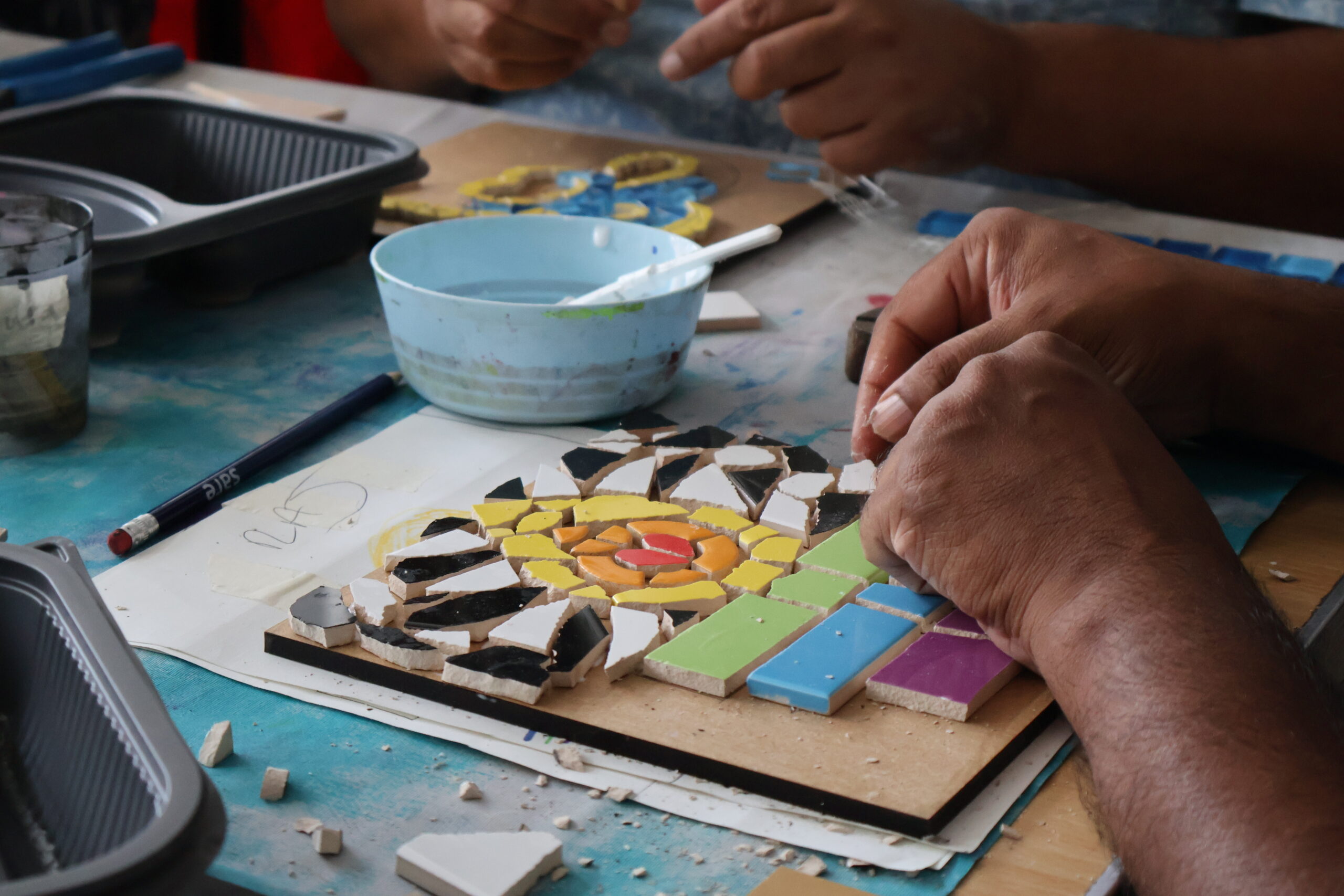
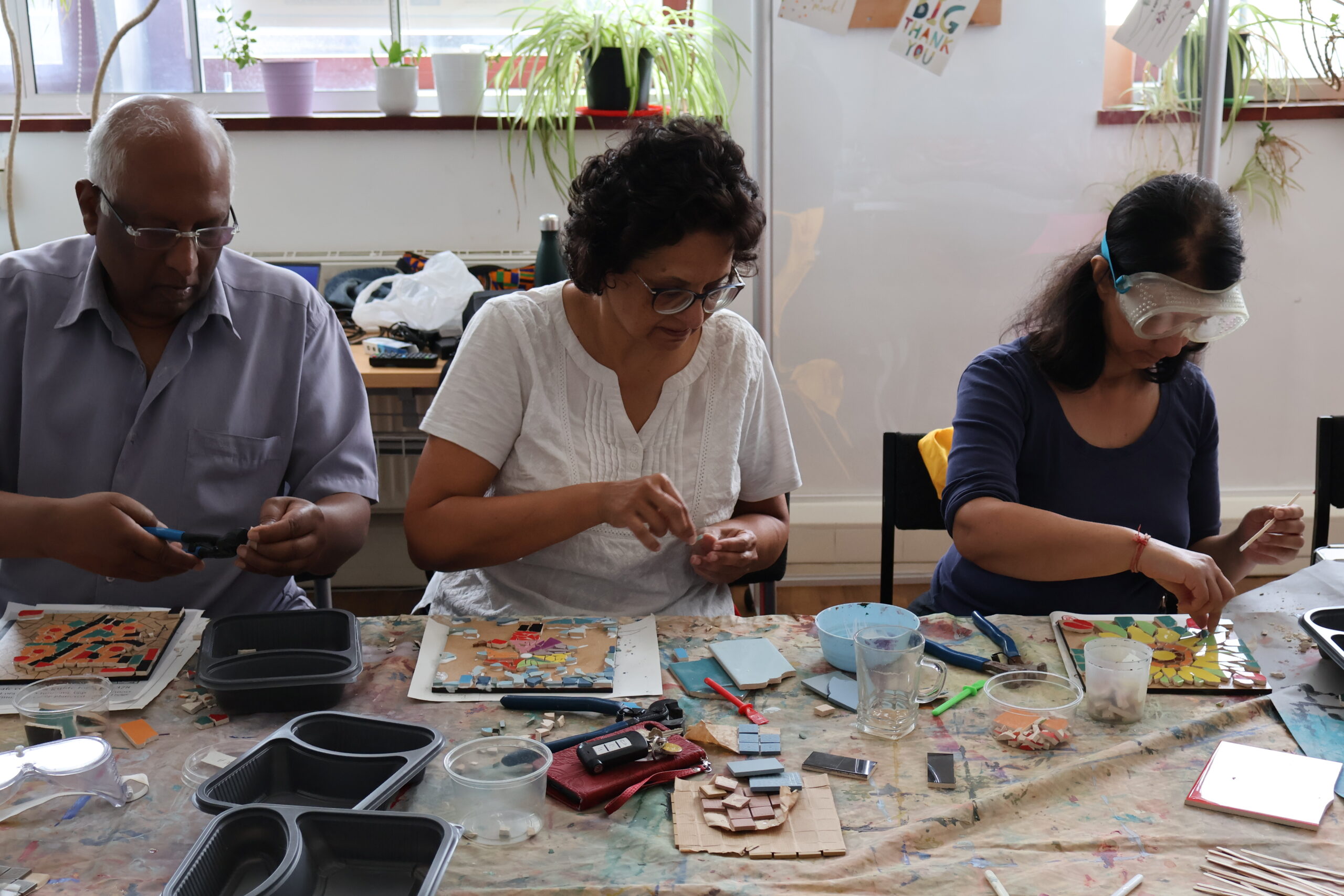
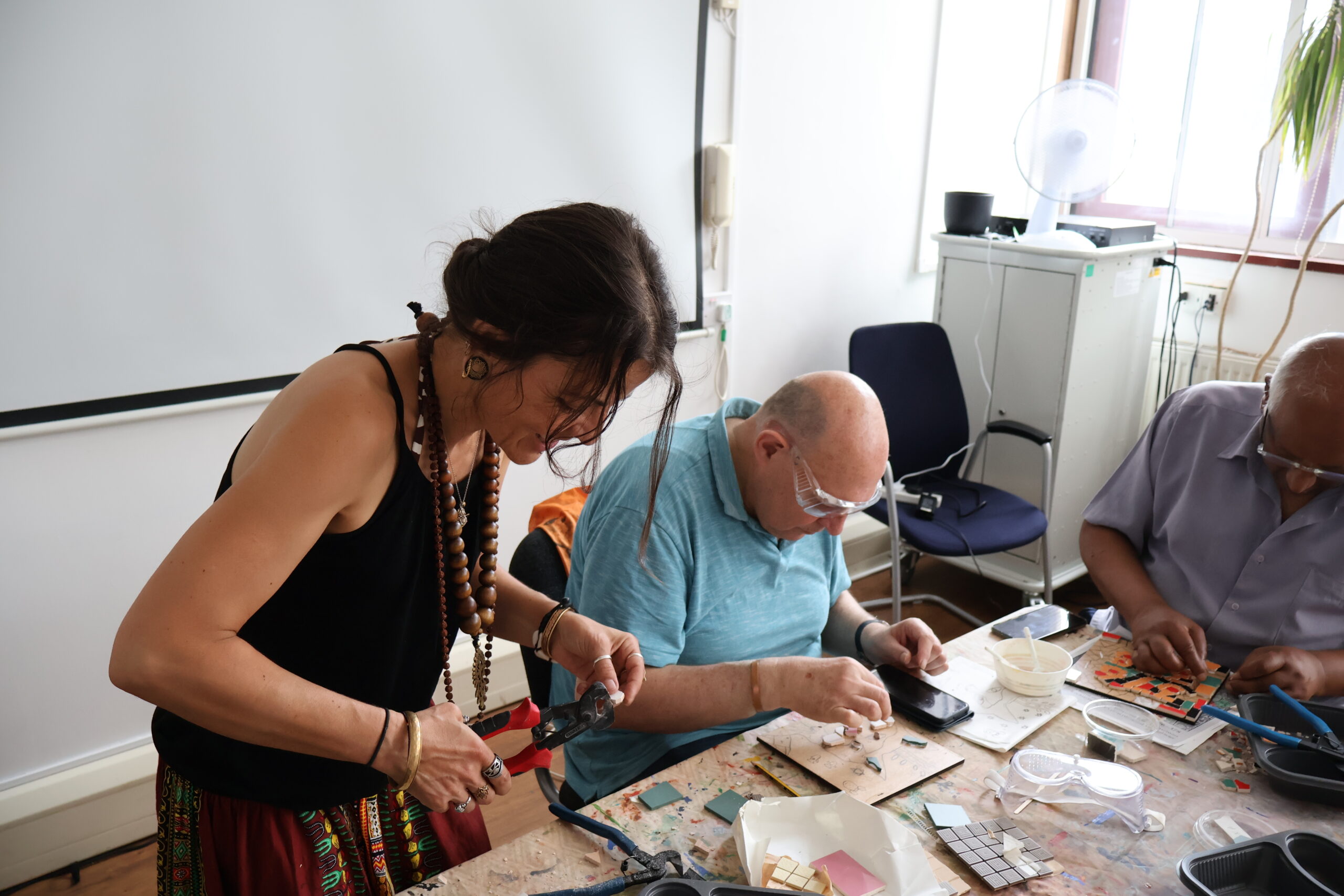
In summer 2025, adult carers in Harrow took part in a creative:voices mosaics project, led by Create artist Teresa Paiva.
For Anika, who has spent 15 years caring for family members, the project offered more than a creative outlet:
“People [have] connected with each other. The group has been really supportive.”
Together, participants designed and created mosaic tiles which were later installed outside the building.
“I got emotional seeing the [mosaics] installed outside the building. I’m so proud and everybody’s done really unique and beautiful artwork.”
The shared creative goal helped participants support one another while creating something lasting to enhance their community.
Shared experiences
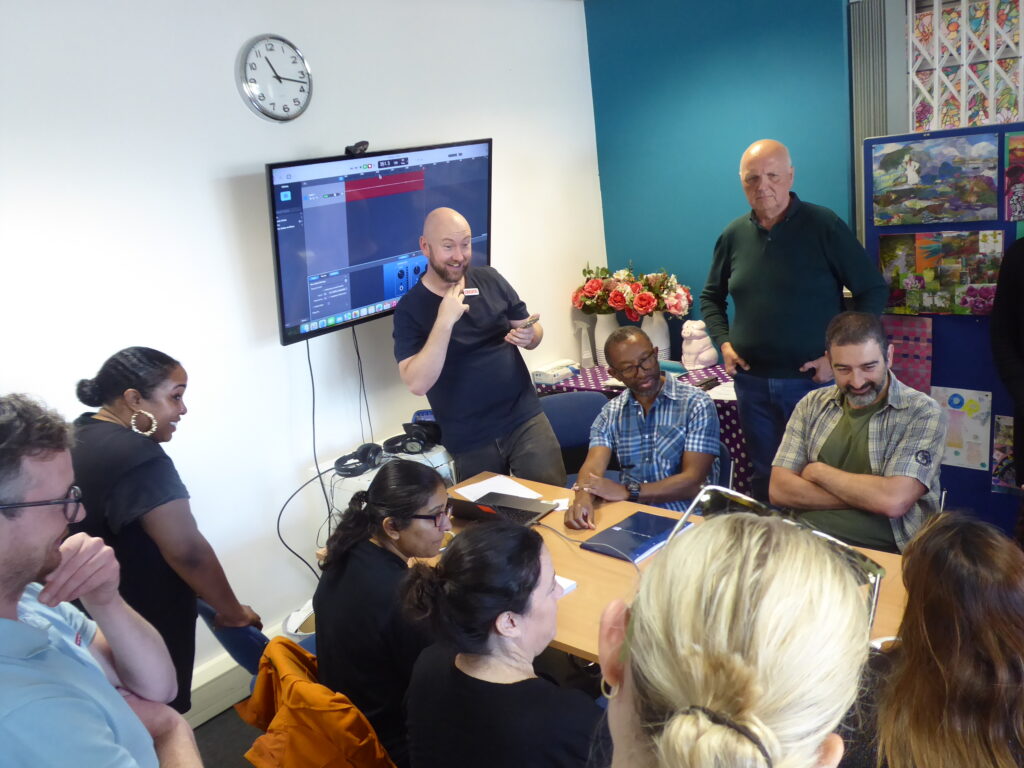
In autumn 2025, carers in Enfield explored radio drama through our creative:voices project, with Create writer James Baldwin.
Harry, a former teacher who cares for his autistic son, described how caring responsibilities can affect social connections:
Carers tend to be more isolated than other parents, so bringing [them] together is really beneficial.
Harry, creative:voices participant
As participants worked together to write and produce a radio play, they connected with one another, creating bonds that would live beyond the workshop:
“The [other carers] are a really nice bunch of people, and I hope we all keep in touch.”
For Harry, the opportunity to spend time with people who understood his experiences was just as important as the creative activity itself.
Combating loneliness in later life
Community is equally important for older adults.
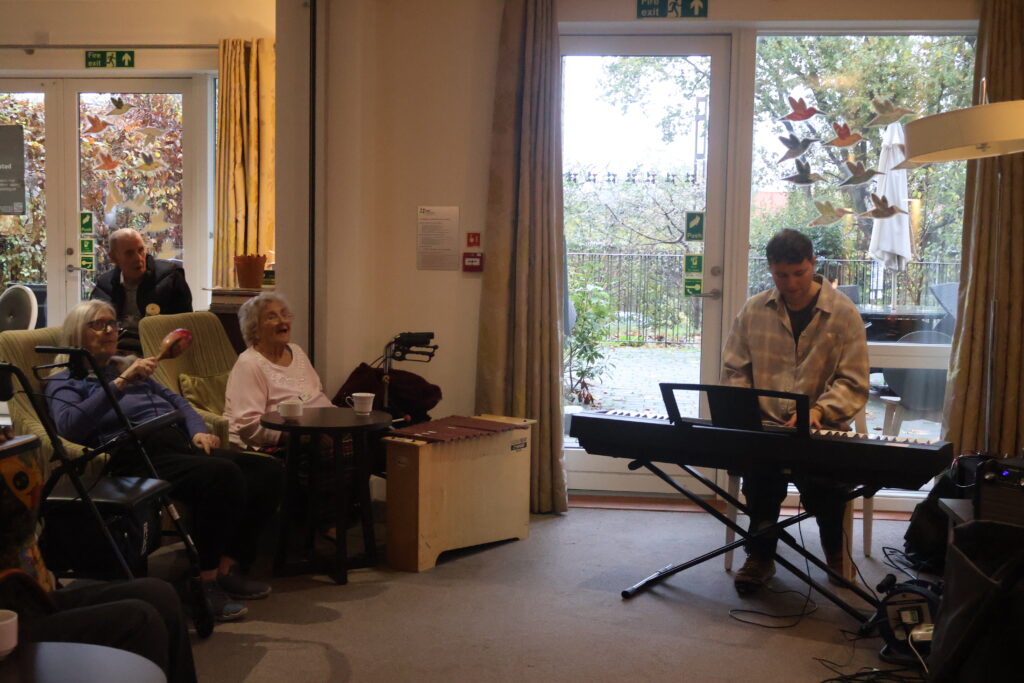
At the end of 2025, participants at Lorenco House in Haringey took part in music workshops through our art:links programme, led by musician Joe Steele.
Philippa (77) explained the difference that projects like these can make:
[Projects like this] bring us together. You feel you have somebody. You are not isolated, you are among people, which is very good indeed.
Philippa, art:links participant
Research shows that social connection is closely linked to wellbeing in later life. Creative activities provide a natural way for people to meet, collaborate and share experiences.
Why creating together matters
Whether making mosaics, producing radio drama or performing music, the creative activity itself is only part of the story.
What often matters most are the conversations, encouragement and friendships that develop along the way.
At Create, we see this time and time again: when people create together, they connect with one another, build confidence and become part of something bigger than themselves.
Thank you to City Bridge Foundation, The Headley Trust, Johnston Nijman Foundation and White Stuff for funding these projects.
Community is one of the most powerful protective factors for wellbeing. Research by Office for National Statistics found that people with strong social connections report higher life satisfaction and lower levels of anxiety, while loneliness is linked to poorer mental and physical health outcomes.
For young people admitted to inpatient mental health services, building connections can be difficult. Long stays in hospital, interrupted education and periods of isolation can make it harder to form friendships and maintain confidence.
Create’s creative:tandem programme works with children and young people admitted to mental health units due to serious conditions including psychotic, depressive, anxiety and eating disorders, self-harm or suicidal thinking. It provides them with vital opportunities to create, connect and express themselves through the creative arts.
Creating together
In 2025/26, we delivered three creative arts projects at Bethlem Adolescent Unit (BAU). We spoke to Donna, Activity Coordinator at BAU, about the impact these have on young people.
“Some of these kids haven’t got confidence, they haven’t been in education and so they’ve not been socialising and [feel] isolated.”
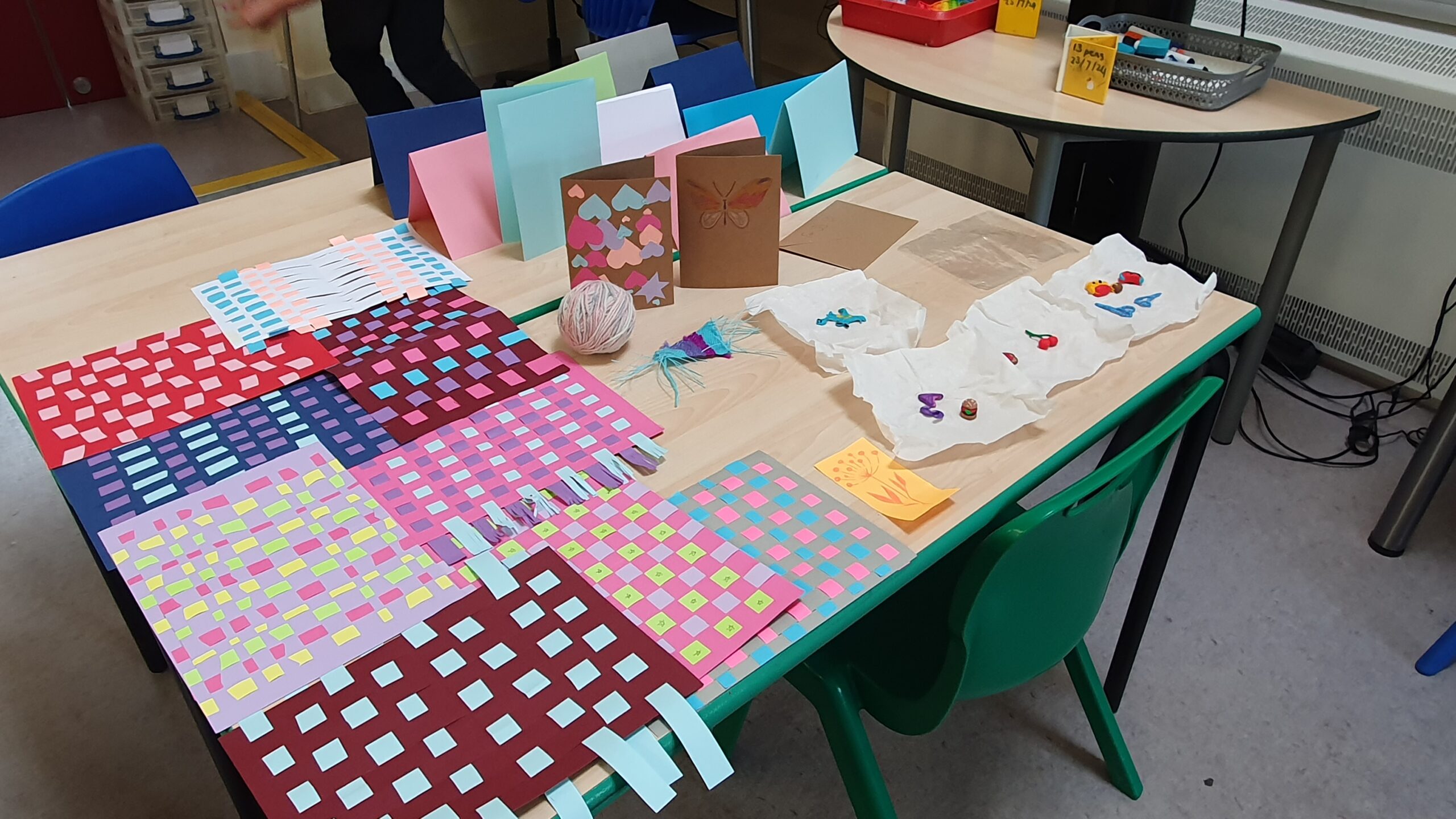
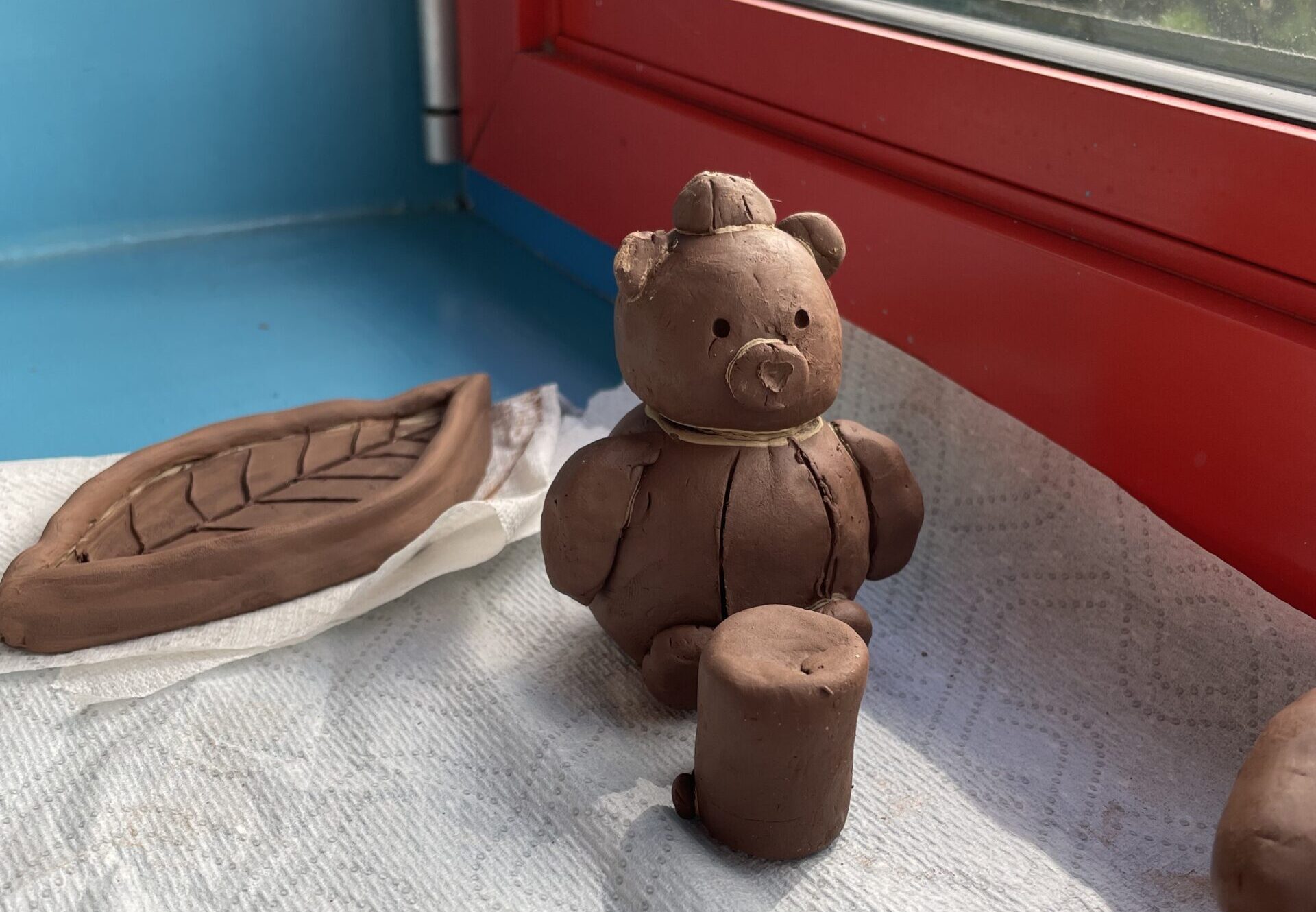
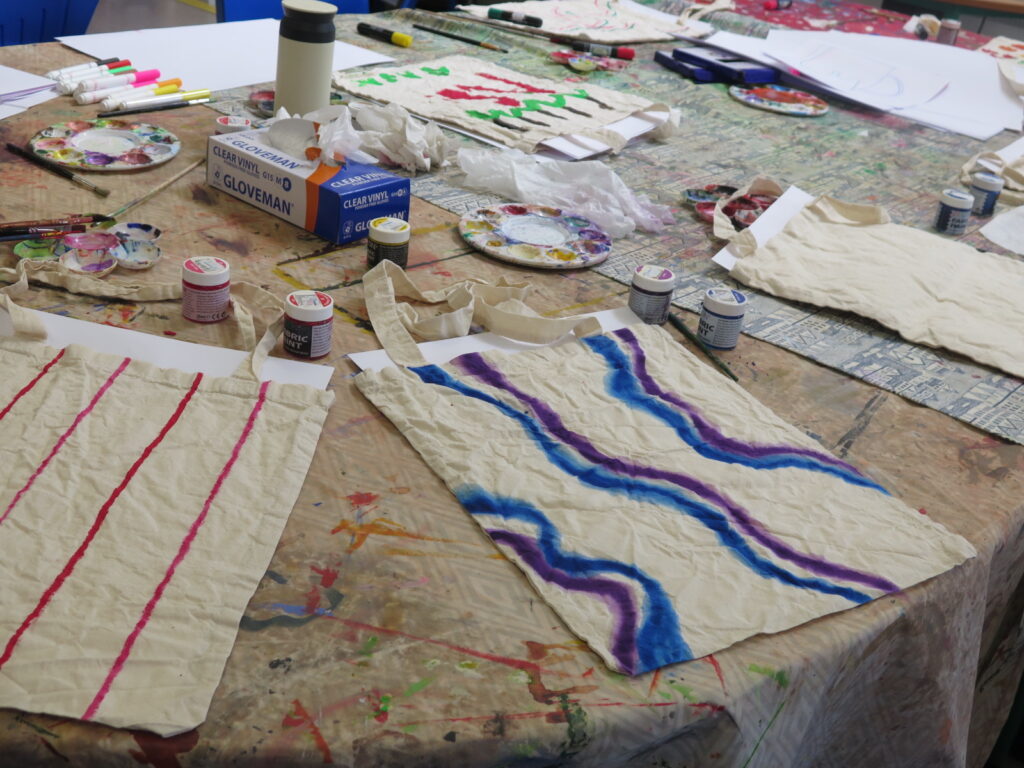
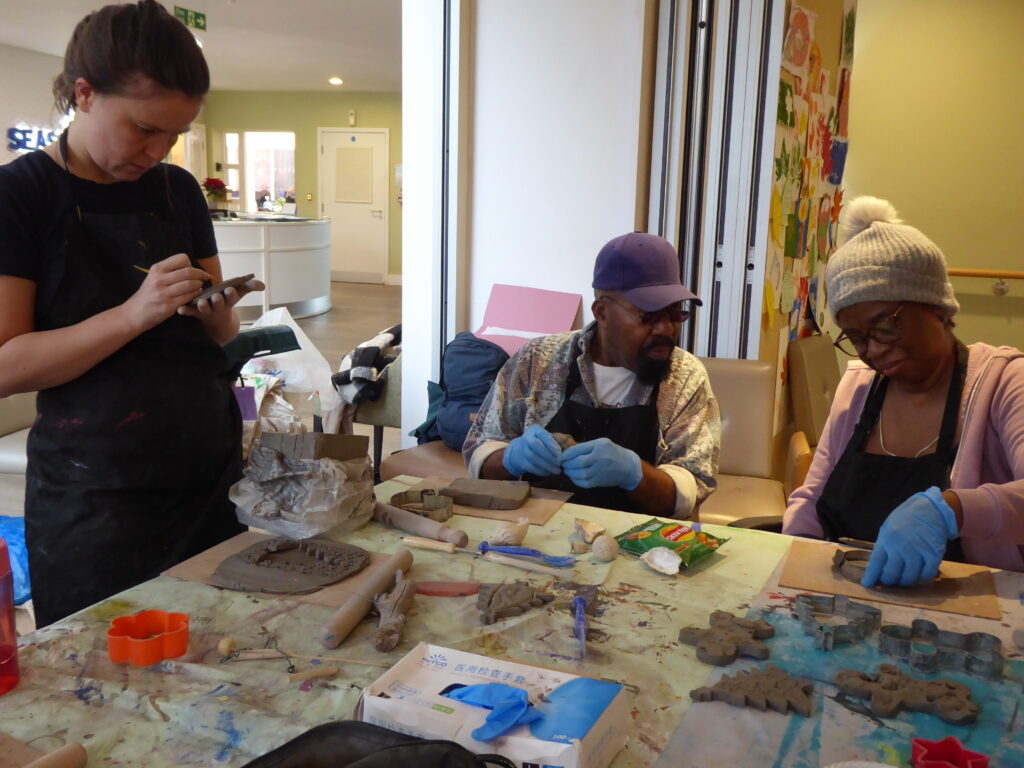
Led by our professional artists, the workshops gave participants the opportunity to work with materials including clay, textiles, paint and collage. For Donna, having artists come into the unit provides something different:
“Create brings a new dynamic to the unit; it encourages young people to join together and it builds their confidence. It’s a good thing to have a professional coming from outside.”
GROWING CONFIDENCE
Many of the young people at BAU have experienced significant setbacks and challenges before arriving on the ward. Donna recalled one participant who took part in a visual arts project:
“[There was] a boy in the summer who had mania and was really poorly. He was using clay [in a Create workshop] and instead of being told ‘you can’t do that’, [Create’s artist] was saying ‘that’s fantastic. Let’s display this work.’ He thought it was marvellous.”
“It’s inclusion for young people who haven’t been included, for young people who have been told ‘your work is not good enough.’ “
An artist telling them that their project is brilliant – [this] builds their confidence.
Donna, activity coordinator at bau
By focusing on creativity rather than limitations, our projects help young people see themselves in a different light.
Building a community
Research consistently shows that shared activities help to strengthen social bonds. Creativity can be particularly powerful because it provides a common goal, helping conversations and connections develop naturally.
Donna saw this happen throughout the workshops:
“[The workshops] encourage the staff and young people to interact more positively. Most of the [participants] are quite individual and do their own thing. When Create are here, even though they’re doing different projects, the [participants] are all in the same room and chatting.
“People say “do you want some of my clay?” or “shall we do this together?” and soon they’re passing beads around and making a bracelet [together]. It’s good for everybody, including the staff, who are always firefighting and don’t get to do creative things. They [get] a different perspective on a child and they think “I can try getting some clay from the art room next time.”
For young people who may feel disconnected from education, friendships or everyday life, these moments of connection matter:
“[Creativity] is a great expression.“
It builds their self-esteem and helps them connect with other young people.
Donna, activity coordinator at bau
“They [feel] actual achievement when they see their work displayed. They [learn] that everything doesn’t have to be perfect. They’re smiling and enjoying it, [focused] on the here and now and not worrying about what’s going on.“
Why this work matters
At Create, we believe creativity is about more than self-expression. It is also about connection.
Projects like creative:tandem enable young people to work alongside one another, share ideas and experience a sense of belonging during what can be an incredibly difficult period in their lives.
By creating together, participants build confidence, strengthen relationships and become part of a community.
Thank you to London Freemasons’ Charity for funding this project.
Captivating exhibition gives voice to unpaid carers from Edinburgh and Glasgow
A remarkable photography exhibition that celebrates the talent of unpaid adult carers is taking place in Edinburgh from Thursday 15 June to Sunday 18 June 2023, with the launch event on Thursday 15 June 2023.
Photograph by one of the carers taking part in creative:voices
The exhibition features captivating photographs taken by adult carers who attend Care for Carers Edinburgh and Glasgow East End Community Carers. It is a celebration of their participation in creative:voices, a multi-artform programme that enables adult carers to take a break from their caring responsibilities. The programme was designed and delivered by Create, the UK’s leading creative arts charity, and aims to empower and enhance the wellbeing of carers by providing them with an outlet for self-expression.
The project has been run online since the pandemic and participants, who became friends through taking part in creative sessions together for several years, are only now able to meet for the first time. Through various artforms the programme enables carers to discover new skills and connect with others who share similar experiences.
Why does it matter?
One in eight adults in the UK is a carer. Carers provide unpaid care for a family member or friend who is ill, frail, disabled or has mental health or addiction problems. Many are unable to take a break from their caring responsibilities and 42% say that their personal relationships, social lives and leisure time have been restricted. 81% of carers feel lonely or isolated as a result of their caring role. 72% of carers say they have suffered stress or depression as a result of caring.
creative:voices was designed to alleviate feelings of isolation and enhance wellbeing, enriching carers’ sense of belonging in their community and increasing their confidence in themselves and their abilities.
What have participants said?
Susie found that the project gave her both new skills and confidence:
“I can use the skills that I’ve learnt in the [project] to take a picture of a flower or bird. It makes me feel better and happier. I think it’s important for us to make the time to educate ourselves. I have learnt that I can do this. I learnt that I’ve got more confidence, and I feel more empowered that I can do photography. It was great to hear the other carers admiring my photos. It was just so pleasing to hear that someone actually likes what I did.”
Lachlan said creative:voices helped bring him out of his shell:
“I’ve always found it difficult to talk to people. I’m a bit of an introvert. This project with Create totally put me at ease. I found it very easy to talk to the other people. I just loved every minute of it. Each week I’d be apprehensive, and then within five minutes I forgot about any inhibitions and just sat down and enjoyed myself. The project has taught me to challenge myself and try things that I’m not comfortable with.”
The project is supported by First Sentier Investors and the exhibition is held at Care for Carers Edinburgh. The event promises to be an enriching experience for all attendees and serves as a reminder that the creative arts have the ability to give a voice to those who may often go unheard.
Create’s Founding Chief Executive, Nicky Goulder, commented: “I am excited and delighted that the talents of this dedicated group of unpaid adult carers are being showcased at this exhibition in Edinburgh. We designed this partnership project during lockdown to provide a creative outlet for adult carers from Edinburgh and Glasgow, helping to reduce isolation and enhance wellbeing. These amazing individuals give so much to their loved ones and being able to bring them together in person after so many years is going to be moving and inspiring. It’s wonderful that such strong friendships have developed. Our thanks go to First Sentier Investors for making this project possible.”
Across the UK, many older adults face increasing isolation. Age UK estimates that around 940,000 older people are often lonely, with more than a million saying they go over a month without speaking to a friend, neighbour or family member. For those living with dementia or poor mental health, opportunities to connect, learn new skills and build confidence can be even more limited.
Create’s creative:engagementprogramme, in partnership with international law firm Ashurst, offers something different: a space to explore creativity, meet others and rediscover a sense of purpose.
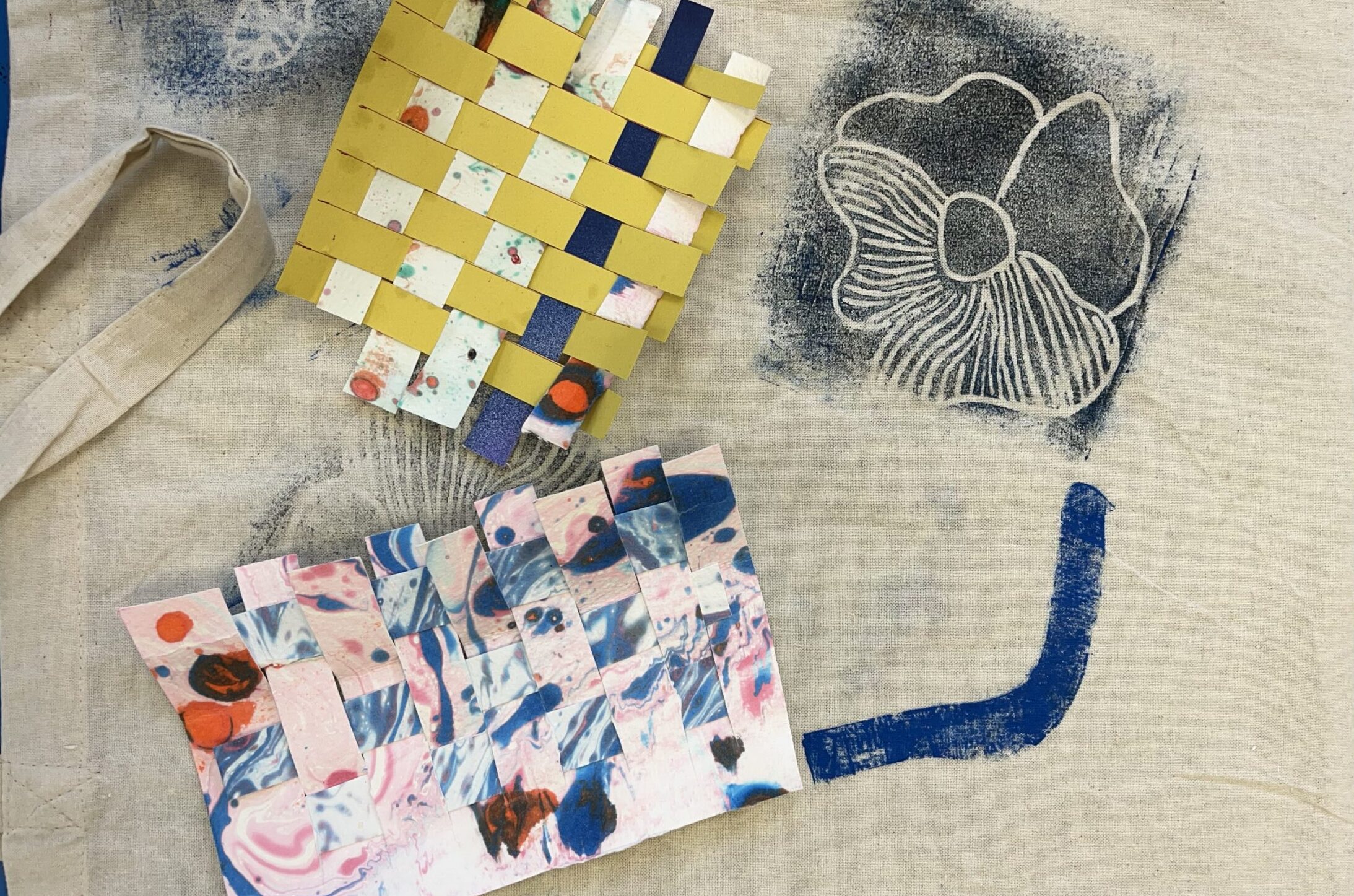
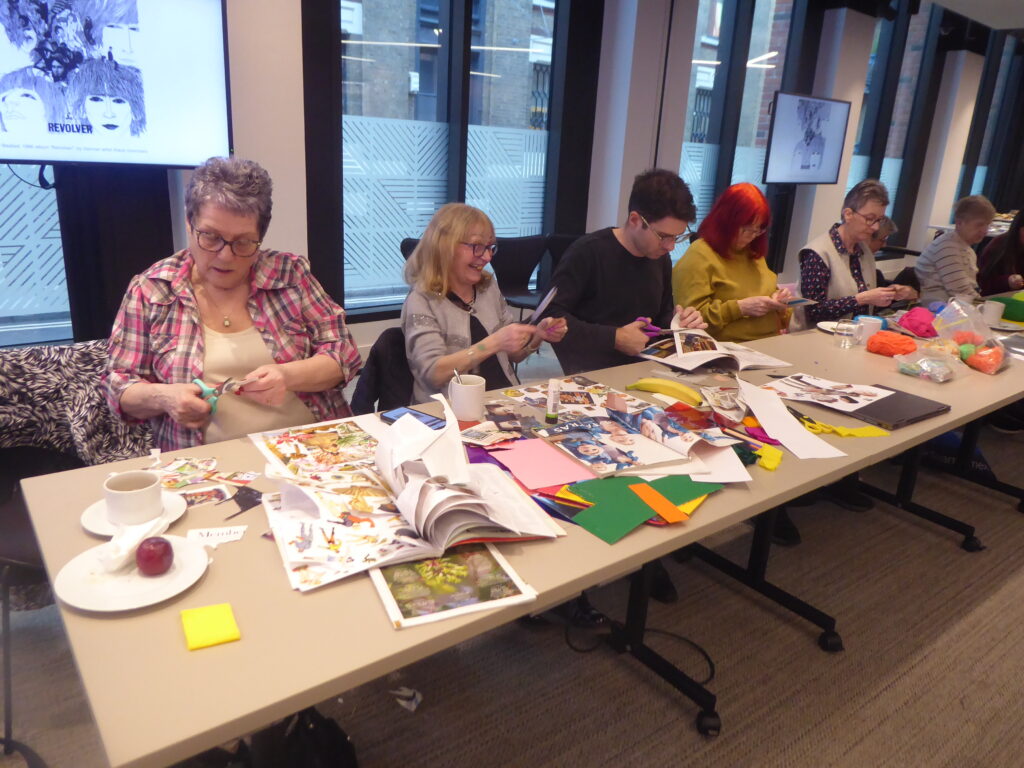
Jean (69) took part in a series of visual art and jewellery-making workshops, led by our professional artist supported by Ashurst volunteers.
Stepping outside your comfort zone
“I think we’ve been really lucky and everybody’s really enjoyed [the project]. We’ve been designing jewellery using paper, we did marbling, collaging with magazines and we learned how to make bookmarks with beads. I’m actually using my bookmark at the moment!”
At first, some of the activities felt unfamiliar:
“I’ve never done jewellery making before. It’s fiddly and I was thinking ‘I’m never going to be able to do this’. But with the right tools and guidance, it proves that you can do it.”
Through the workshops, Jean discovered not only new skills, but new confidence.
“I’ve started making earrings, and I’ve actually sold something. I’m going to design some Christmas cards next!”
Connection through creativity
For many participants, the social aspect of the sessions is just as important as the creative process:
“The other participants are so sweet. Even though some have got severe disabilities, they’re really getting on well.”
The shared experience of creating something together helps break down barriers and build meaningful relationships:
“I’ve met a lot of lovely people here. It’s good to talk and it’s good to hug.”
Supporting wellbeing and memory
For Jean, creativity has also played an important role in maintain her wellbeing:
“My memory is very bad. Coming here and trying to keep physical and involved with different things – and learning new skills – that’s good for your memory.”
“If you’re out of your comfort zone learning a new skill, you’re stretching your brain.”
According to research, engaging in creative activities enhances memory by strengthening neural pathways to the brain’s memory hub.
Jean’s story is a powerful reminder that creativity can offer far more than a pastime. It can build confidence, spark connection and support wellbeing –helping older adults feel engaged, valued and inspired.
Thank you to Ashurst for funding and hosting this project, and to the firm’s staff for providing volunteering support.
Creativity and connection: how create supports older adults
Later life can bring significant change: from retirement and reduced mobility to the loss of routine and social networks. For many older adults, these shifts can lead to increased isolation and fewer opportunities to try new things or connect with others. Research shows that nearly a million older people feel disconnected from their communities, with limited opportunities to take part in activities that support their wellbeing.
According to research by the University of New Hampshire, social isolation can lead to significant damage to physical health, increasing the risk of heart disease by 29%, stroke by 32% and dementia by 50%. Creative activity offers a powerful way to counter this – creating shared experiences that bring people together, build confidence and support wellbeing.
Building confidence through creativity
For many participants, our professionally-led creative workshops are an opportunity to try something new.
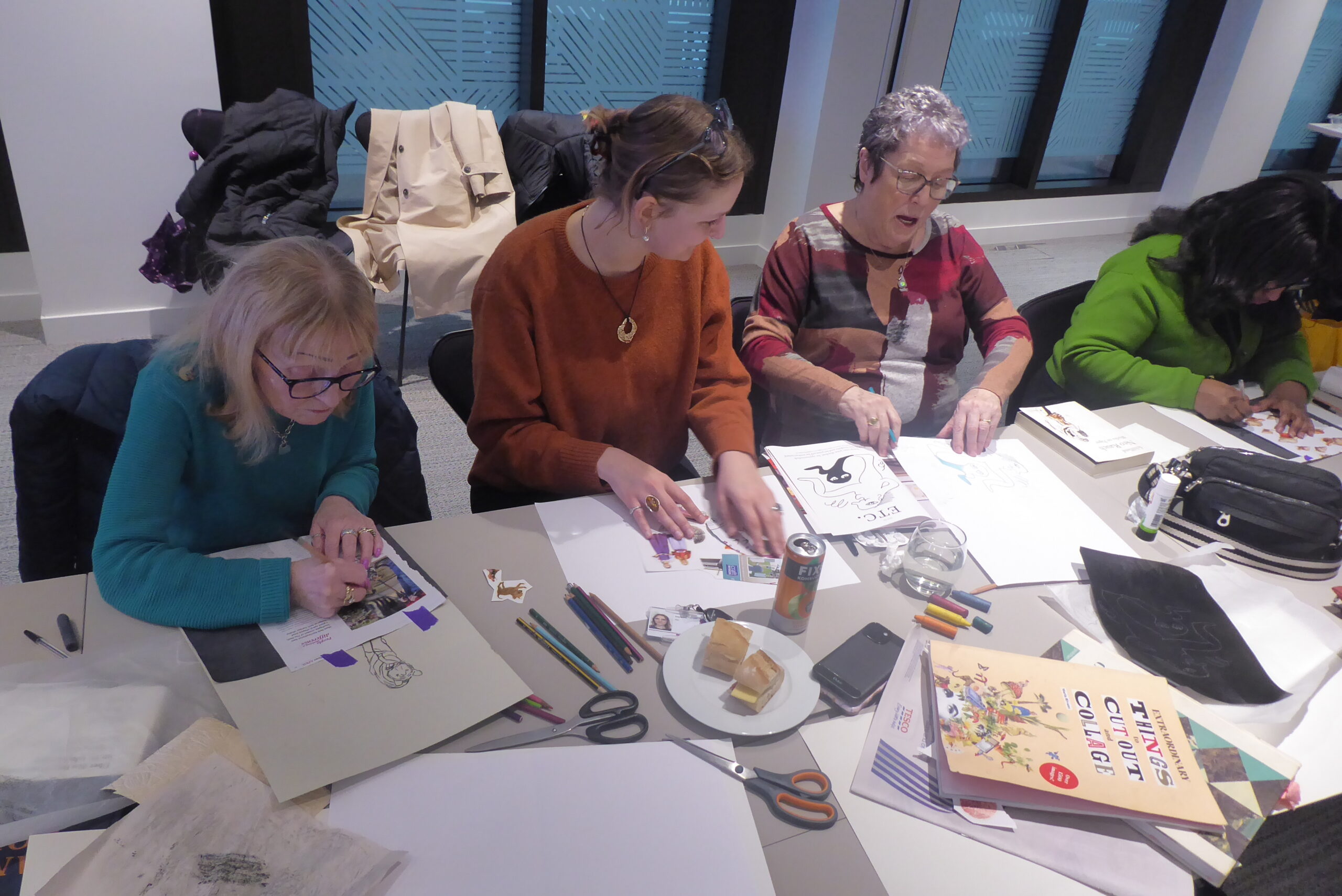
Yan* (78) took part in our art:links collage project in Westminster, led by our artist Anna Clarke. Yan shared:
“I wasn’t sure if I’d be able to do creative things. But this time, I thought ‘why don’t I give myself a chance to try it?’”
As her confidence grew, so did her sense of achievement:
“I’m just so pleased with the result. It’s a good challenge – if I don’t challenge myself now, when will I?”
In Tower Hamlets, May participated in our creative:links ceramics project with our ceramics artist Liz Jackson. Like Yan, she discovered new possibilities through creativity:
“I’ve never made a pinch pot before. I’ve learned that you can do so many more things with ceramics. I wouldn’t have dreamed of drawing something like this before, because I would have thought ‘I can’t draw’. But I’ve learned that I can do things like this now.”
Curtis* (87), took part in our art:links visual arts project in Haringey, also led by Liz Jackson, and was surprised by what he was able to achieve:
“[Creativity] keeps the brain going, it makes you socialise. I didn’t know that I could do this. I learned that I could create so many things!”
Reducing isolation and creating community
A key part of Create’s work is bringing people together. When participants share a creative goal, it becomes easier to connect and form relationships.
Yan described the importance of doing the project as a group:
“The group is amazing. I made a couple of friends and you get ideas and feedback from them. It’s really important that we’ve met, because most of us are not working now. So this helps us interact.”
Similarly, May reflected on the social aspect of the ceramic project:
“Making things and listening to everyone else is amazing. I enjoyed working with this rest of the group. You can chat to them and it was kind of cheerful.”
For Curtis, the sense of belonging was particularly meaningful:
“It’s nice to have young people around because I’m an old man and it makes me feel like I belong.”
Creativity and wellbeing
For older adults, creativity can offer a vital route to connection, confidence and self-expression. By working alongside professional artists and peers, participants are supported to try new things, build relationships and rediscover a sense of purpose.
Yan shared her personal experience:
“[When I’m creative] I feel satisfaction. I did something I’ve never done before in my life. All my life I’ve been an active person, being physical, but this [project] has helped me create something from my brain – it’s more mental. This mental wellbeing is important. It helps me to think ‘maybe I can create some more things.’ I’m being more open now and it helps me [reflect] inwardly.”
Similarly, Curtis expressed how important having the experience was for him:
“I enjoyed every single thing [about this project] and it made me feel so good inside. To work with a professional artist is something [unexpected] and it’s very good. I don’t have to think about anything else [when I’m creating art], and whatever experience I have, I can pass it on.”
As Curtis so powerfully puts it:
“Life is not just for one person, life is for everyone.”